


Tourist transport24 hours
RioEmpres Tours Transporte Turístico
RiobambaAv. Canónigo Ramos Y Teófilo Sáenz Edificio LUXOR Diagonal Al Parque Sesquicentenario
03260 0995
Ecuador travel
Browse the tourism services you can book on your visit to Riobamba

 Discover EcuadorDiscover EcuadorDiscover EcuadorDiscover EcuadorDiscover EcuadorDiscover EcuadorDiscover EcuadorDiscover EcuadorDiscover EcuadorDiscover Ecuador
Browse the tourist attractions you can visit in Riobamba

The Urbina parish station is the highest in the route of the Ecuadorian railway. It is located at 3,600 meters above sea level, at the foot of the Chimborazo and Carihuairazo volcanoes. In the Urbina station, as it is known, there is an Interpretation Center or Ice Museum. Its main character is Baltazar Ushca, of the Puruhá indigenous nationality, known internationally as "the last ice maker of Chimborazo". He tells the tourists how he extracts fossil ice from the volcano's glacier and goes down to sell it in the markets of Riobamba, for the preparation of ice cream and fruit juices. The life and unique activity of Baltazar has been recorded in films such as "Los hieleros del Chimborazo", in documentaries and videos of the most important international television networks. The ascent to Chimborazo is another option, following the route of Baltazar. It is the "Walk of the Ice cream Makers". The landscape with its diverse colors can be appreciated from the height of this viewpoint. Due to the low temperatures, which can reach zero degrees, warm clothes will be of great help. The High Mountain Refuge of Urbina offers accommodation. It is the center of operations for visitors to learn about the culture of the Ecuadorian Andes. As in every place of the moor, paper trees grow here, alpacas, grazing animals such as cows and horses and the frailejones can be seen. Nature photography is an unavoidable activity. In the recreation of a small hut, the habits and culture of the Chimborazo Indians are represented. Next to the stone fire, the guinea pigs and rabbits with a good supply of grass to feed them. The mat serves as a bed. In the souvenir shop there is how to buy scarves, ponchos, gloves, wool hats, handicrafts. The route is not complete without visiting La Moya, a community of indigenous Puruháes, dedicated to community tourism. To get to Urbina by train, you must board the train in the city of Riobamba. The Riobamba station has a museum about the history of the railway. It explains through a model the obstacles that had to be overcome at the end of the 19th century and the beginning of the 20th century, in order to unite the sierra with the coast. Because of these difficulties, the Ecuadorian railway came to be called "The most difficult train in the world". The Avenue of the Volcanoes unfolds all its splendor. On a clear day, from Riobamba you can see the volcanoes Sangay to the southwest, Altar to the east, Chimborazo and Carihuairazo to the northwest and Tungurahua to the north.

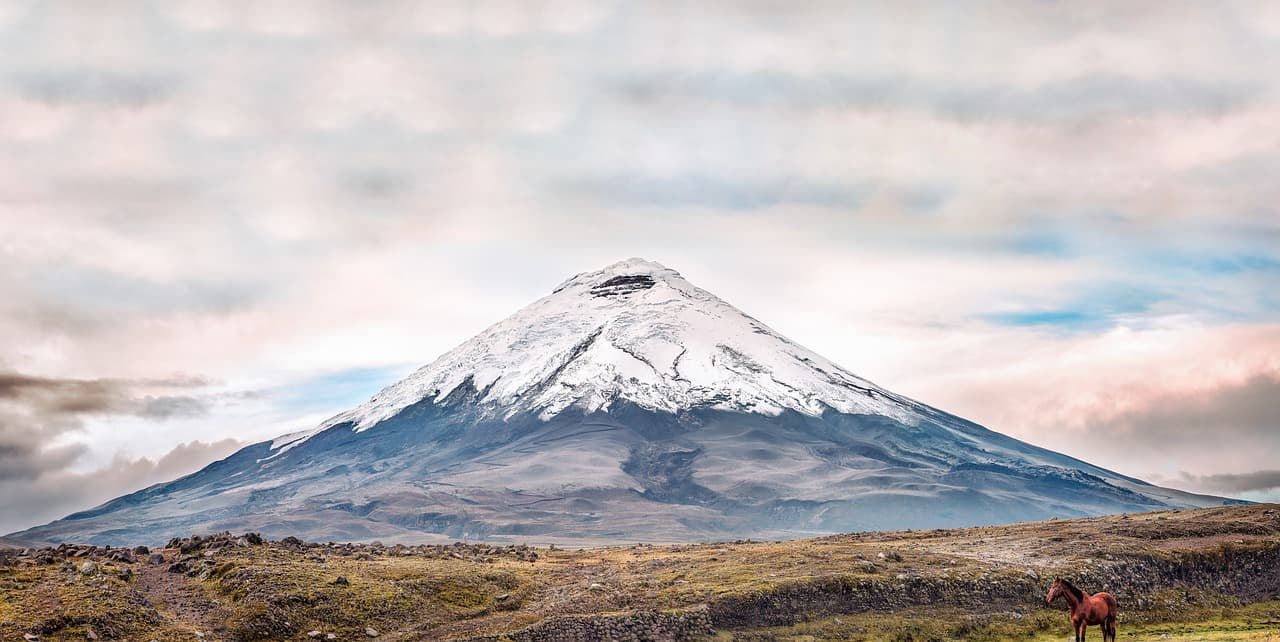
The Chimborazo is the highest volcano and mountain in Ecuador and the furthest point from the center of the Earth because the Earth's diameter at the equatorial latitude is greater than at the Everest latitude (which is approximately 28 ° north) . Its last known eruption is believed to have occurred around 550 n.e It is located in the central Andes, 150 km southwest of Quito and 20 km northwest of Riobamba. Measured from the center of the earth, it is the highest mountain on the planet exceeding the height of Everest by two km. Until the 19th century, Chimborazo was considered the highest mountain on the planet. This reputation led to many attempts to conquer its peak, especially during the 17th and 18th centuries. In 1802, Baron Alexander von Humboldt, accompanied by Aimé Bonpland and the Ecuadorian Carlos Montúfar tried to climb to the summit, but gave up at 5875 masl because of the soroche (discomfort felt at the heights due to thinning of the air, also called pointing). At that point, the Baron was at the highest altitude reached by any European in written history. The first man who reached the summit was Edward Whymper with the brothers Louis and Jean Antoine Carrel in 1880. As there were many people who doubted this success, Whymper climbed again, on a different path the same year with the two Ecuadorians David Beltrán and Francisco Campaña. Chimborazo Volcano Location The top of Mount Chimborazo is only one degree south of Ecuador, so even though its elevation above sea level, which is 6,268 meters above sea level, 2530 m lower than Everest, is 6384.4 km from the center of the planet, which represents 1.5 km farther than the top of the Asian colossus. It is located 150 km southwest of Quito and 20 km northwest of Riobamba. The Chimborazo is surrounded by the Chimborazo Wildlife Reserve, which forms a protected ecosystem to preserve the habitat of the native camelids of the Andes such as vicuña, llama, and alpaca. How to get to Chimborazo Volcano? To get from Riobamba to the first Carrel refuge there is a distance of 50 km; Those who have private transportation must take the Panamericana Sur until the “Cemento Chimborazo” Factory, continue to San Juan and from there in 40 minutes you will reach the Carrel Refuge By public transport you can travel by bus, from the land terminal depart buses from the Bolivar Fleet twice daily (8:45 and 13h15) that pass through the Carrel refuge. Chimborazo Volcano Glaciers The upper part of Mount Chimborazo is completely covered by glaciers, with arms to the northeast that descend to 4,600 meters above sea level. Its glacier is the source of water for the population of the Ecuadorian provinces of Bolívar and Chimborazo. The Chimborazo glacier has declined in recent decades, apparently due to the combined influences of climate change, ash as a result of the recent volcanic activity of Tungurahua and the Phenomenon of the Child. As in other glaciers in the Ecuadorian highlands, the ice from the Chimborazo glaciers has been extracted by ice makers to be sold in the markets of Guaranda and Riobamba. In ancient times, people transported ice to coastal cities, such as Babahoyo and Vinces. Volcanism in the Chimborazo Volcano Chimborazo is predominantly a stratovolcano. About 35,000 years ago the eruption of Chimborazo produced an avalanche of rubble, the deposits of those underlying Riobamba. Then it erupted several times during the Holocene, the last time around 550 AD ± 150 years. The Geophysical Institute of Ecuador (IGE) considers the Chimborazo volcano as potentially active. Chimborazo Volcano Elevation With a height of 6,268 meters above sea level, Mount Chimborazo is the highest mountain and volcano in Ecuador. The summit of Mount Everest reaches a greater height above sea level, but the summit of Mount Chimborazo is the furthest point on the surface of the center of the Earth with Huascaran in second place. This is because the Earth's shape is a geoid of revolution, a sphere flattened by the poles, resulting in a bulge around the Earth's equator. This bulge is caused by the rotation of the Earth, and causes the diameter at the equator to be 43 km longer than the diameter of one pole to another. The Chimborazo is one degree south of Ecuador and the diameter of the Earth at the equator is greater than at the latitude of Everest (8848 masl), about 28 ° north. Despite being 2580 m lower than the height above sea level, it is 6384.4 km from the center of the Earth, 2168 m higher than the summit of Everest (6382.3 km from the center of the Earth). Point closest to the Sun Chimborazo Volcano The one who colloquially is known as "the point closest to the Sun" does not make it such. The inclination of the earth axis achieves, beyond the differences in height between the different points on the earth's crust, that the points closest to the Sun are, depending on the day and year, from those around the Tropic of Cancer (20- June 21, summer solstice in the northern hemisphere) to those bordering the Tropic of Capricorn (December 21-22, summer solstice in the southern hemisphere); on the other hand, the points of the globe on the equator are only candidates to be closest to the Sun in intermediate periods, of equinoxes (March 20-21, September 22-23). Such is the case, so little is the terrestrial topography compared to what influences the inclination of the axis of the Globe in the calculation of which points are closer to the Sun, than during some days, around the summer solstice in the hemisphere North, the point of greatest depression on the planet, located somewhere in the Mariana Trench (northern hemisphere), will be closer to the Sun than the top of Aconcagua itself, the highest point above sea level of the entire southern hemisphere. Chimborazo Volcano Climate Being at the foot of the Chimborazo its climate is cold, however, at noon the sun almost always shines on the city and sometimes the temperature reaches 13 degrees Celsius. Chimborazo Volcano Flora Regarding the best known plants are ferns, Azorella pads, gentians, chuquirahua, architect, chocho flower, achupallas, mosses and lichens. But the important thing about this ecosystem is the property of storing large amounts of water that seep into the earth because of the permeability of its soil, which leaks feed nearby lands by regulating the microclimate of the Sierra. Chimborazo Volcano Fauna The outstanding fauna is typical of the moor, mainly represented by dwarf deer, llamas, vicunas, deer, small rabbits, marsupial mice, wolfs of the moor, the cervicabra. Among the birds that are generally observed are the white-chested, long-beaked and long-tailed quindes, the curiquinges, the common piggy or eaglet and the king of the Andes the condor, in addition there are the animals introduced by man such as sheep, llamas, vicuñas and horses. Chimborazo's last ice maker The old tradition of the Chimborazo ice makers that still remains. Every Tuesday and Friday, the farmers of the town of Cuatro Esquinas go on donkeys from 06h00 to the Carlos Zambrano glacier. There with picks and shovels they remove the earth and discover the ice. They get blocks that weigh up to 30 kilos. They immediately wrap them with straw and begin their journey to the San Alfonso de Riobamba market where they sell them at a price between eight and ten dollars. The Chimborazo Volcano Landscape In the access road you can see unique landscapes such as the sunset in the moor while crossing, at full speed, a flock of vicuñas. In addition, from this volcano you can observe with patience the crossing of the train that descends between rocky alleys from Huigra and pinking the "Devil's Nose", towards Bucay, warm coastal canton. Mountaineering on the Chimborazo volcano This sport is practiced, by preference, in the King of the Ecuadorian Andes thanks to its imponderable beauty. The Liberator, Simón Bolívar, was the first to practice it. Snow Hostel At present, with the construction of the “Snow Hostel”, visitors have the facilities to spend the night in the volcano. Source: https://es.wikipedia.org/wiki/Volc%C3%A1n_Chimborazo https://www.ecured.cu/Volc%C3%A1n_Chimborazo Images: https://commons.wikimedia.org/wiki/File:VolcanChimborazo.JPG https://commons.wikimedia.org/wiki/File:AMA_Volc%C3%A1n_Chimborazo_3_(8226318049).jpg https://commons.wikimedia.org/wiki/File:Volc%C3%A1n_Chimborazo_Chuquiragua.jpg https://commons.wikimedia.org/wiki/File:Chimborazo_01.jpg

This academic support center of the National University of Chimborazo allows access to bibliographic and multimedia collections. Welcome to the Unach Library The Library of the National University of Chimborazo de Riobamba - Ecuador, is an academic support center that promotes study, learning and research, facilitating access to information to the entire university community, through the management, organization and dissemination of its bibliographical and documentary funds that help the consultants in their investigations. On the two floors where the Unach Library operates, it has a documentary collection of 14,760 copies, several reading rooms and a digital library, which can be accessed from the institutional website, which allows users to access scientific bases . Additionally, it has a multimedia room, with 5 computers from which you can access information and consult the catalogs of existing material in the libraries.

The historical museum is located in what is now the property of the 11th Galapagos Armored Cavalry Brigade based in the city of Riobamba. Military Museum "Historic House" of the Galapagos Armored Cavalry Brigade No. 11 These lands were the jurisdiction of the “San Nicolás” farm, located north of the city at the exit to Guano and owned by Colonel Melchor Costales. The owner built a farm house to house the workers, replacing an existing shack. This house was later refurbished and is what is now known as the Brigade's current museum. There are historical references that the peace treaty of the so-called "War of the Center" was signed in the Hacienda San Nicolás house, where the revolutionary forces of Alfaro confronted the conservatives. Attractions of the Riobamba Military Museum Room 1: Communications Here you can see the evolution of communication, it is a light look at the existence of the company and its technical and functional evolution. Room 2: Artillery There are American and Italian howitzers, anti-aircraft machine guns, etc. Room 3: Infantry It dates from 1798 when rifles began to be made with much more modern technology. Weapons also have their corner in this museum, rifles and other weapons of the Armed Forces are exhibited. Room 4: Exhibitions Photos of events that occurred in the city, photos of the commanders and founders are exhibited. Room 5: Cavalry There are different types of chairs and accessories used by the cavalry. Room 6: Furniture A variety of objects are presented; among these uniforms, military beds, religious images and sabers. Hours of operation of the Military Museum of Armored Cavalry Previous call.
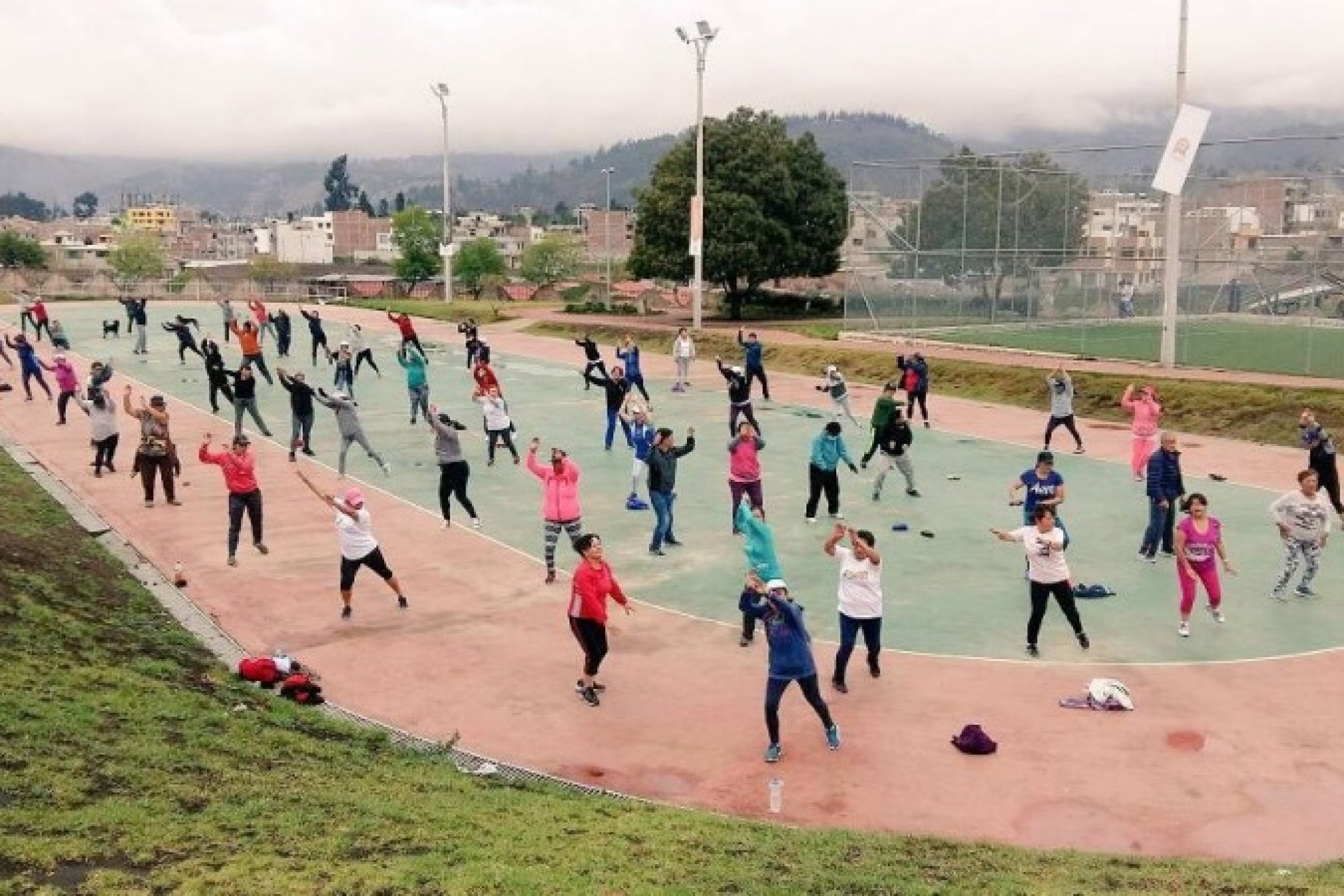
A space for sports use that has children's games. Here you can have fun doing sports, the place has free Wi-Fi available granted by the municipality of Riobamba. What should you know? The practice of sport summons the people of Riobamb to the Sesquicentennial Park This recreational site has three synthetic courts, four for multiple use to practice sports such as: volleyball, soccer or tennis; there is a skate rink, another for professional skating and there is a specific area for jogging or walking, which is one kilometer long. Next to the park is the Olympic Bike Track, which is the venue for national and international competitions. The park has a specific and safe area where the playgrounds are located. For citizen safety there is adequate lighting for sports training at night. To have access to the fields, it must be requested through a letterhead letter to the Director of Justice and Municipal Surveillance, the letterhead is requested at the collection windows of the GAD of Riobamba, this as part of the process that seeks the care and use of public spaces in the city.

Tribute to Dr. Luis Alberto Costales, one of the most important sons of Riobamba. The monument to Luis Alberto Costales Cazar is an emblematic work of the city of Riobamba, it was designed in 2009 by the Quito sculptor, muralist and illustrator Eddie Crespo Garzón at the request of the city's Municipal Council, in order to commemorate the memory of this poet, philosopher, teacher, speaker, historian, farmer and politician from Rio de Janeiro, in addition to presenting the poetic work of Luis Alberto Costales. The Municipal Council of Riobamba held the vote that gave way to the planning of the work. The main monetary resource was donated by the writer's family, while the Municipality of Riobamba provided the physical space for the construction of the monument. The inauguration was held on May 2, 2009, on José Veloz and Jacinto González Avenues and was attended by the former Mayor of Guayaquil, former Minister of Government and former President of the National Congress, Eng. Raúl Baca Carbo, close friend of the writer. Thus, a platoon from the Galapagos Armored Brigade was also present; who marched from the base to the location of the monument and Grenadiers of Tarqui to pay tribute to this famous character. The monument is made up of a hexagon of 6 Greek-style pillars, representing each of the writer's children. 3 types of stone were used, the first extracted from the Chimborazo volcano for the pillars, black stone for the faces and finally flagstone was used for the floor. The square that surrounds it was decorated with benches and lions carved in stone and gardens.

On the site of the famous battle of Tapi, a place of pilgrimage and enjoyment rises. The "Loma a Quito" is a complex that integrates the San Antonio de Padua Church and the April 21 Park, where you can see the Narea mural What should you know? The San Antonio de Padua Church is located on Argentinos and Juan Lavalle streets. Parque 21 de Abril is located between Calle Argentinos, Av. Miguel Antel León and José Orozco. On April 21, 1822, in the "Loma de Quito" the battle of independence "Batalla de Tapi" was fought, a confrontation that occurred between elements of the independence forces led by the Venezuelan general Antonio José de Sucre and the royalist forces commanded by Colonel Nicolás López. This is a cavalry action performed without firing a single bullet. On this elevation, the beautiful church located at the top of the Loma de Quito is currently erected, and is run by the Franciscan fathers. In its construction, its domes stand out, as well as the interior paintings painted by Spanish, Italian and Ecuadorian artists. The start of construction of the temple was on August 26, 1883 and it was blessed on April 15, 1951, being its promoter Fray Toribio López, it is one of the most popular temples for the faithful, a large number of celebrations are held here. liturgical acts throughout the year.

Also known as the Church of the Loma de Quito, it has spectacular architecture, where the image of the Lord of Great Power and the Immaculate Conception stands out. A work that embellishes the city of Riobamba. San Antonio de Padua Church Riobamba Construction: XIX century Architectural style: Neoclassical San Antonio de Padua Church Architectural Review Its Solomonic columns form three naves, in the upper part of the altar is the image of San Antonio, in the lower left part San Francisco, in the center the Lord of Great Power and to the right the image of the Immaculate Conception. Location San Antonio de Padua Church The site chosen for this church and its convent is one of the most beautiful in Riobamba; located in an upper area of the city, in front of the 21 de Abril park, a historic place that recalls the libertarian events of 1822. The construction of this church begins in 1935, being the Franciscan priest P. Toribio López who directs the works and the author of the plans, the Arch. Aulestia. The construction ends in 1958 and in 1964 the main bell tower with a public clock is placed. In the central altarpiece are the effigies of Jesus del Gran Poder, the Immaculate Conception, Saint Francis of Assisi and Saint Anthony of Padua. Riobamba Eucharist Schedule The church opens its doors from Monday to Sunday during Eucharist hours. Monday 07h00 and 08h00. Tuesday to Saturday 7:00 a.m., 8:00 a.m. and 7:00 p.m. Sunday 6:00 a.m., 7:00 a.m., 8:00 a.m., 9:00 a.m., 10:00 a.m., 6:00 p.m. and 7:00 p.m. Attractions San Antonio de Padua Church The main altar of gold leaf with the sculptures of San Antonio de Padua, San Francisco, Jesús del Gran Poder and the Virgin of the Immaculate Conception. On the outside of the church is the Clock of the main dome.

In the Battle of Riobamba a victory was achieved that began to light the flame of the Independence of Ecuador. Recalling the memories of the Battle of Riobamba in 1822, it is said that this cavalry encounter began right in the streets of the south of the city where patriots and royalists clashed. After an arduous battle, the tremendous insult culminated in the plains of Tapi. Upon his triumphant return, Marshal Antonio José de Sucre climbed to the highest point in the city where he proclaimed the phrase that would motivate his entire patriotic army: "From this hill, to Quito..." The park commemorates the historical event with a commemorative pyramid , the bust of General Juan Galo de Lavalle and the historic mural worked on by Eloy Narea. “On December 19, 1921, the ordinance was issued for the erection of a monument to the heroes of the Battle of Riobamba on the Loma a Quito; On April 21, 1922, the April 21 Park was handed over. On January 19, 1923, Natale Tormen reports having completed the commemorative pyramid of the park” (Cepeda, 2010, p. 260. Riobamba). SCHEDULE From 06:00 to 19:00 every day. ATTRACTIONS San Antonio de Padua Church, Nationality Mural, Commemorative Pyramid and bust of Juan Galo Lavalle.

The large-scale Nationality Mural, painted in Narea, speaks of our nationality, from its origins to the present time. What should you know? The Mural of the History of Riobamba, also identified as the Mural of Narea, alluding to its author Eloy Narea, was a project that was financed by the Riobamba Rotary Club and the Ecuadorian Ceramics Company. The chosen place was the 21 de Abril park, on one of its walls this ceramic mosaic of more than 1200 pieces was placed; work that concluded in April 1975. Considered one of the best works of art in the city, the mural is a civic and educational space to study and disseminate the history of these territories from pre-Hispanic times to the 20th century.

In the fifth “Concepción”, municipal property, a whole sports citadel was planned, whose axis was the Riobamba stadium. The challenge of the construction was to provide the necessary spaces for the sports activities to be developed in the First Olympics in Ecuador from March 14, 1926. The newspaper "La Razón" reported in detail about the process. In an area of 30,000 square meters, the following were built: a stadium with a reinforced concrete grandstand with a capacity for 2,000 people and on the ground floor spaces for a bar, restaurant, dance hall and billiards; other sports areas: cycling track, marathon racing, endurance, speed and car track. The work was financed by the Chimborazo Banking Society, built in five weeks under the direction of José Melián, the Tormen brothers and the engineers Altamirano and Valencia; Outstanding was the management and momentum achieved by José María Falconí, President of the Chimborazo Sports Federation. On November 10, 1973 it changed its name to "Olympic Stadium City of Riobamba" was remodeled and reopened, in that year the Municipality donates the building to the Sports Federation of Chimborazo. This stadium was one of the venues for the 1995 Ecuador U-17 World Championship and the U-17 South American Championship that took place in the country in 2011. The Olympic Stadium since March 11, 2016, bears the name “Dr. Fernando Guerrero Guerrero”, in posthumous tribute. Dr. Fernando Guerrero was president of the Chimborazo Sports Federation from 1968 to 1976. His main actions include: the definitive donation of the Municipal Olympic Stadium to the Chimborazo Sports Federation through a public deed signed on November 10, 1973 when it was Mayor of the city and president of the Provincial Sports Matrix; channeled economic resources for the construction and subsequent inauguration of the "Teodoro Gallegos Borja Coliseum", an event recorded on Friday, March 1, 1974; He carried out one of his last steps in favor of the sport by obtaining the economic resources for the acquisition of the synthetic track, inaugurated on February 7, 2004. SCHEDULE The stadium is owned by the Sports Federation of Chimborazo and they keep it open for athlete training from Monday to Friday from 08:00 a.m. to 12:00 p.m. in the morning and from 2:30 p.m. to 6:00 p.m. in the afternoon, on Saturday and Sunday according to the game schedule. the Olmedo Sports Center established by the National Soccer Championship; it also opens its doors for sporting, social and cultural events in Riobamba. ATTRACTIONS The main attraction of the stadium is its history and being part of the firsts of Riobamba.

A park where old friends meet to talk or play a game of cards, there are sports courts to enjoy with friends and family. What should you know? The place is generally frequented by elderly and retired gentlemen, who gather in groups of friends and sit down to play cards at the cement tables installed in the park, in addition to its surroundings we find rest chairs, a basketball court and soccer; without forgetting the grandstand that was built because in the past the April 21 party parades took place on Veloz Avenue, currently, the November 11 school civic parade is the only one that passes through this route.

The Guayaquil park is known as the Children's Park since it has several distractions so that children and young people can enjoy this recreational area and can enjoy a moment of healthy fun with family and friends. What should you know? The Guayaquil park was built in 1941 and was inaugurated on April 21, 1951; It is a family meeting place, it has large green spaces, an artificial lagoon with pools that give it movement and when they are turned off, pedal boats and rowing boats are rented for people who want to take a walk around the lagoon. The children's games make the little ones enjoy the park, you can see zoomorphic and anthropomorphic figures, murals that describe the habitat of the coast, mountains, east and Galapagos regions. On weekends, especially on Sundays, artistic and cultural events are held at the Acoustic Shell. There are monuments of different characters that marked the history of Riobamba such as José Joaquín de Olmedo, the first Ecuadorian vice president elected in the first constituent assembly of August 14, 1830 in Riobamba, Captain Edmundo Chiriboga, hero of the war between Ecuador and Peru in the year of 1941, among others. The park is located in the north central part of the city, close to other relevant places such as the IESS (Ecuadorian Institute of Social Security) hospital, the Calero house, the Puruhá walk park, the Olympic Stadium where the best sporting events in Riobamba. Schedules From 06:00 to 20:00 every day. Attractions Artificial lagoon, Acoustic shell, children's games, soccer fields, murals of the four regions of Ecuador, monuments of important people from Riobamba, anthropomorphic and zoomorphic sculptures.

Central Bank Museum in Riobamba After a rehabilitation process, the old Central Bank Museum in Riobamba opened its doors on February 5, 2020. The rehabilitated property has state-of-the-art lighting and audio systems and Wi-Fi service. This cultural venue seeks to preserve memory, both nationally and in the Sierra del Centro region of the country. The Museum and Cultural Center of Riobamba invites us to go through history from a current experience, seeking to reflect on the past as a scenario that must be constantly explored and reconstructed. This museum is not only a place to enjoy the observation of works of art or heritage pieces, the museum also aims to be a meeting point and dialogue between the curatorial proposal and the knowledge and wisdom of visitors. It is a space that promotes the cultural offer of the region and that brings us closer to the milestones of the past that we do not know or have forgotten, all this through the permanent exhibition of topics such as: Hall of the Elder Ancestors. Illustrious Women of Riobamba. Archaeological pieces from the Chimborazo area. Samples from the ancient city of Riobamba. Social movements and Monsignor Leonidas Proaño. Hours of operation of the Museum and Cultural Center of Riobamba From Tuesday to Friday from 8:00 a.m. to 5:00 p.m. and Saturday, Sunday and holidays from 10:00 a.m. to 4:00 p.m. Cost of admission to the Riobamba Museum and Cultural Center Gratuitous.

What should you know? The Teodoro Gallegos Borja Coliseum is located at José Veloz and Vicente Rocafuerte streets, in the Riobamba canton belonging to the Chimborazo province, Ecuador. This space was built in the 70s. It is currently used to hold championships, contests and artistic or public numbers. Its infrastructure is very good, so it can be used for all these purposes. It has free WIFI enabled for the use of citizens. Outside the coliseum there are businesses that sell lupine ceviche, every day, from 9:00 a.m. to 2:30 p.m. Exteriors of the Teodoro Gallegos Borja Coliseum Outside the city's largest coliseum, several hollows promote typical flavors of the Ecuadorian Andes. Lupine ceviche in the Ecuadorian Andes With less than 30 years of history, Riobamba lupin ceviches have managed to earn a good place on the gastronomic map of Ecuador. A group of Riobambeñas at the end of the last century, found in the pork chochos, roasting and leather, an opportunity to start itinerant food businesses. The innovation prompted these vendors to incorporate tomato juice, thus adopting the name of ceviche. This ceviche is made up of lupins, tomato juice, pork skin, onions, mincemeat and is accompanied with canguil, toast and chifles, they also offer two types of chili, the strong one that really contains chili and is tomato-colored; or the soft one that is a lupine smoothie without chili and is white. Apart from its traditionality, this dish is very nutritious since the chocho has a large amount of calcium that contributes to the strengthening and care of the bones. In the Coliseum, the stand of Doña Mari stands out

The Raúl Dávalos bullring is one of the oldest buildings in Ecuador, where bullfighting events, social and cultural acts are held. The Monumental Plaza de Toros Raúl Dávalos is considered one of the oldest in Ecuador, it has a capacity for 13,000 people. In addition to bullfighting events, artistic musical shows, social and cultural events are held there. Its biggest shows are held in the April and November festivities. Inaugurated in 1952 by Morenito de Valencia and Lorenzo Pascual Belmonteño. Designed and built with wooden bleachers and a useful cover on the stands, the square housed 5,000 fans in its first stage. In 1995, refurbishment work was undertaken to expand its capacity to 10,000 people and provide it with functional facilities and beauty. The renovated square was reopened in 1997. For a decade, an interesting list of bullfighters has paraded through this arena, including pigtails of the stature of Rafael Camino, Manolo Sánchez, Víctor Méndez, Uceda Leal, Oscar Higares, Serafín Marín, David Fandila "El Fandi" accompanied by the most outstanding of local bullfighting and important rejoneadores. Beyond the names, Riobamba, land of bulls and bullfighters, has acquired prestige for the correct presentation of the bulls that are fought, an element that gives seriousness and substance to the bullfighting event. In addition, by municipal decree Riobamba was named as the Bullfighting Capital of Ecuador. The bullfighting events are the Fair of the Lord of Good Success, held annually during the Riobamba Festivities, in April and November. SCHEDULE The Plaza de Toros opens its doors exclusively for the bullfighting, social and cultural events generally scheduled for the Riobamba festivities. ATTRACTIONS The bullfighting art that takes place during the Riobamba festivities.

What should you know? Opening hours of the Museo de las Madres Conceptas Tuesday to Saturday from 9:00 a.m. to 12:30 p.m. and from 3:00 p.m. to 5:30 p.m. Cost of admission to the Museo de las Madres Conceptas $3.00 adults and $1.50 students. Museum of the Convent of the Conception of Riobamba The Religious Art Museum of the Convento de la Concepción is considered one of the best religious art museums in Ecuador, due to the quality and value of the works it possesses. It belongs to the Convent of the Madres Conceptas and is considered a historical-cultural jewel of the religious tradition of ancient Riobamba. It is distributed in 14 rooms where a large number of sculptures, canvases, furniture, priestly ornamental elements woven in gold and silver, replicas of the cells of the concept mothers and silverware and goldsmith objects from the 17th and 18th centuries are exhibited, such as the monstrances . The Conceptas de Riobamba Religious Art Museum, established in 1980 and remodeled in 1997, is one of the jewels of the culture, history and religious tradition of the old and new Riobamba. It brings together a valuable collection that represents the highlights of the Quito School of Art. According to the chronicles of the Monastery, the foundation of the convent in the old Riobamba took place in 1605. Visiting its valuable samples we admire the art, discover the faith of our people and receive the good news of the truths, religious and human values that they and we believe. At the end of the tour, the Conceptas Mothers invite you to visit a souvenir room where you will find: crucifixes, bracelets, denarii. In the 14 rooms, paintings, sculptures, goldsmithing and sculpted stone are exhibited, dating from the 17th, 18th and 19th centuries; in room 15, a permanent exhibition of photographs of the Lord of Good Success, Patron Saint of Riobamba, and of the Holy Tuesday procession. Attractions of the Madres Conceptas Museum ROOM 1: ANGELS In this room the angels Gabriel, Rafael among others are exhibited, being the symbol of evangelization in the 16th century. ROOM 2: THE NATIVITY Urns with the birth of the Child Jesus are exhibited, demonstrating the great imagination and devotion of the people. ROOM 3: PETER Normal-size images that were used for the processions are exhibited and at the same time the denial of Pedro is shown. ROOM 4: HOLY WEEK This room shows the customs and the great respect that people have for Holy Week or Major Week. ROOM 5 AND 6: CRUCIFIXES In this room different crucifixes made by a sculptor passionate about religion are exhibited. ROOM 7: TRINITY There are several pieces of sculpture some of them are covered with gold and silver. ROOM 8: MARY Here are paintings from the colonial era that still exist today. ROOM 9: CORONATION There are several representations on the transition of the Virgin. ROOM 10: MASS AND HOLINESS In this room we will find several models of oil paintings on canvas, wooden sculptures, polychrome and silver. ROOM 11: FURNITURE Here you can find objects made with leather, figures with relief, the special thing about this room are the bargueños. ROOM 12: DAILY LIFE This room is a vivid representation of how cloistered nuns usually live. ROOM 13: WOOD AND CERAMICS There are decorated and carved objects that only wealthy people kept. ROOM 14: TREASURES The most outstanding monstrances from the 17th and 18th centuries are exhibited in this room. ROOM 15: LORD OF GOOD EVENT In this room there is a permanent exhibition of photographs of the "Lord of Good Success" and the Holy Tuesday procession.

Casa Bolívar is so named because the liberator Simón Bolívar, on July 6, 1822, spent the night in the house that was owned by Colonel Juan Bernardo de León, a character of the Independence of Riobamba. The story tells and says that Bolívar, after his visit to Taita Chimborazo, inspired by its beauty and majesty, arrived in Riobamba and wrote his famous work "My Delirium on Chimborazo" during his stay in that house. The liberator Simón Bolívar was not only a great military and political strategist, who came to liberate so many countries in Latin America, he was also an essayist and, if you like, even a poet, you just have to review some of his letters. His prose was always fine and energetic, through it he exerted a human power of great magnitude, in reality and in theory, to the point that his written thought continues to shine over time, remains current and has been a guide for many. people who seek good and justice. In this house, there is also a restaurant with a delicious gastronomic proposal. It is a great alternative to soak up history, nostalgia, tradition and delicious food. SCHEDULE The restaurant El Delirio operates from Tuesday to Sunday from 12:00 to 10:00 p.m. ATTRACTIONS The main attraction of Casa Bolívar is its history and the heritage architecture of the place.

Religious emblem of the Sultana de los Andes, inside it exhibits the main altar and the effigy of the Lord of Good Success, Patron of Riobamba, which dates from 1650. What should you know? On the outside, its windows in the form of warheads stand out, with a building built in stone and exposed brick. Inside it exhibits the main altar and the effigy of the Lord of Good Success, Patron of Riobamba, which dates from 1650. The oratory of the Lord of Justice, to which miracles are attributed, receives daily visits from the Riobambeños. It was built in the 19th century and its architectural style is neo-Gothic History Church La Concepción Riobamba The history of the Monastery and Church of the Immaculate Conception dates back to 1605 in Colonial Riobamba. After the earthquake of February 4, 1797, the Riobambeños in the resettlement and transfer of the city to the current site, chose a large space for the Convent. The small church that was built at the beginning of the 19th century was replaced by a new project that began in 1889, with the Abbess of the Monastery, Madre Jesús del Santísimo Sacramento Ormaza, and the administrator of the convent's assets, Rafael Cisneros. The plans were designed by Fr. José Lecanda S.J. The first wall began to be raised on February 20, 1890; the work was completed in the second decade of the 20th century. Eucharist schedules of La Concepción Church The Church opens its doors from Monday to Sunday during mass hours. Sunday: 07:00, 08:00, 09:00 and 18:00. Monday: 07:00 and 09:00; and occasionally 08h00. Tuesday, Wednesday and Thursday: 07:00 and 08:00. Friday: 07:00, 08:00 and 09:00. Saturday: 07:00, 09:00 and 18:00.

Plaza Alfaro de Riobamba is known for offering a wide variety of raw materials and various processed products. Alfaro Square The Riobamba train station has the "Plaza Artesanal Alfaro", in this place you can see the 16 stands where products are made with a wide variety of raw materials, among them we have: natural fibers, vegetable fibers, wood, ceramics, jewelry, a multiplicity of crafts are also designed and made that serve to provide visitors with some options to carry a souvenir of their time in "La Sultana de los Andes". Schedules: Monday to Friday from 09:00 to 17:00 Saturday and Sunday from 07:00 to 17:00

It is located in the Riobamba Train Station, this emblematic site has become a space for entrepreneurship. What should you know? The Riobamba train station has a square called "Plaza Artesanal Alfaro". This site has gradually become a place where entrepreneurs show their products, all of quality, all with a great soul. There are 16 booths; in which products are offered with a variety of raw materials that can be found in the area, such as: natural fibers, vegetable fibers, wood, ceramics, jewelry, leather, etc., the artisans make a wide variety of handicrafts that are offered to visitors, so that they can take a souvenir of their visit to Riobamba la Sultana de los Andes. In this station you can feel the history, the footsteps, the sound of the distant train that arrived with signs of progress. History is intact since these epics of progress are what have marked this land and its children as fighters, avant-garde, scattered throughout the world, making this beautiful land proud at every step. Located on Carabobo and Daniel León Borja streets, it is open Monday through Friday from 9:00 a.m. to 7:00 p.m. and Saturdays and Sundays from 7:00 a.m. to 7:00 p.m. Train station and Plaza Alfaro With the arrival of the railway and due to the importance of its geographical position within the national sphere, Riobamba became the strategic point between Quito and Guayaquil; It was also the place of rest for passengers, tourists and merchants who traveled between the coast and the mountains, which is how a rapid capitalization of the local economy was generated that encouraged the establishment of factories, large businesses, the beginning of the hotel industry and banking formation. In September 1917, President Baquerizo Moreno faced the execution of the work rectifying the railway line through Riobamba, obtaining the construction of the new Railway Station based on the plans of the Russo brothers; the building was inaugurated on January 1, 1925, from that date it became an important space for the city, in the eighties and nineties, the space was fenced with a metal mesh and a door for the entrance and exit of the train; its regeneration began in January 2012 by Ferrocarriles del Ecuador, on Wednesday, October 03 of the same year, the recovery work of the Station building was inaugurated. The place showed a new image and took the name "Plaza Alfaro" in honor of the Old Fighter whose bust can be seen on one side of the Station; It has a cobblestone floor, benches made with the old sleepers of the railway line that passes through there; The square is currently consolidated as a meeting space where different fairs, artistic and socio-cultural events are held; located in the traditional neighborhood of Riobamba La Estación. (Hernandez 2017) Train cafe The Café del Tren is a meeting place for tourists and visitors who arrive at the Station, where they can taste food that rescues the Riobambeño gastronomic tradition, operated by local entrepreneurs, who offer dishes typical of the Ecuadorian highlands. Train museum The museum presents an exhibition of old pieces that were part of the process of developing the train in Riobamba; In addition, through a model, it explains the difficulty that this transport had to unite the mountains with the coast, allowing the tourist to know and value the railway heritage of Ecuador.

Looking at the architecture of this traditional beauty one can find certain traces of an ancient time, as if the memory conjures up a castle. This traditional house is an emblem of beauty and heritage value that belonged to Evangelista Calero, a representative Bolivarian shoemaker who settled in Riobamba, married to Delia Briones from Guayaquil, with whom he had three children: Juan, Angélica and Carmela. Due to the economic boom of the city in the 20th century due to the arrival of the train, Calero decided to move his industry to Riobamba on October 28, 1924, where he inaugurated the production plant, mechanical workshops and offices of the shoe company. , becoming its main headquarters. Casa Calero was the house built near the shoe factory to the north of the city, it also had a shoe store on Primera Constituent streets between Larrea and Colón, it should be noted that the buildings exist today. In Guayaquil Calero had his shoe company where he learned the trade in his youth, the good quality manufactured shoes became: "the best footwear in the country"; Calero was a councilor of that city in 1936, where he was also decorated for his work with a gold medal by the Ministry of Economy. SCHEDULE From Monday to Friday from 08:00 to 17:00. Casa Calero currently serves as IESS offices, so your visit must be planned in advance. ATTRACTIONS The architecture of the house with the air of a castle that stands out among the surrounding buildings.

It is a clock brought from Germany and placed in what is now the building of the Federation of Neighborhoods of Riobamba. What should you know? The building has balconies and balusters supported on strong corbels. An important detail that characterizes this building is the top of the tower that was built in 1920 where a clock imported from Germany and installed the same year stands out. It was owned by Mr. Rodolfo Lara, a successful merchant. From 1930 this building functioned as a public clock. The house was restored in 1998 and is currently the headquarters of the "Federation of Neighborhoods of Riobamba FEDEBAR, created in 1952" The building is open from 09:00 to 12:30 in the morning and from 14:30 to 18:00 in the afternoon. FEDEBAR is an Institution that helps with the legalization procedures of the neighborhoods, in addition, the partner neighborhoods can manage, through the Federation, the implementation of infrastructure, working together with the Autonomous Decentralized Municipal Government of the Riobamba canton.

A theme park, recreational with a forest nursery. Where you can take guided tours and enjoy a wonderful tour. What should you know? The Ricpamba environmental theme park is a recreational center, which occupies the facilities of the former forest nursery of the Riobamba Municipal Autonomous Decentralized Government. It is an alternative for family gatherings, a park that invites enjoyment, education and relaxation, it also promotes care and love for nature since it has rest spaces, trails, an artificial lagoon, barbecues, nurseries, an environmental ecological farm, a projection room, interpretation spaces, flora, fauna and the river that runs around it that make it perfect for recreational activities in balance with the natural environment. Unlike other parks, this one does not have soccer, basketball or volleyball courts because it is intended for the conservation of nature by creating ecological awareness in the people who visit it, Ricpamba Riobamba has an area of approximately nine hectares, it was inaugurated on the 9th of November 2014. In this place, in addition, visitors can learn, recreate and learn more about the importance of caring for nature. In addition, prior authorization from the Department of Environment, Health and Hygiene, families can have picnics and barbecues. Interactive tour to learn how to take care of nature The tour is interactive and is guided by technicians from the Cabildo Riobambeño to cement this message. In this need, and as part of a process that seeks to generate a culture of environmental awareness, the Municipality of Riobamba, in cooperation with the Madrid City Council, created the theme park called 'Ricpamba', inside which environmental walks can be carried out, in which citizens can have a clear experience of what it means to care for nature and protect local natural resources, such as the Chibunga River. The tour is completed when, once the importance of caring for nature and the need for afforestation and reforestation is known, each of the children can plant a small plant, as a mark of their commitment to caring for the environment. Schedules It is open from Monday to Friday from 08:00 to 15:30 and Saturday and Sunday from 08:30 to 18:00.

The Red Square of Riobamba, or Plaza de la Concepción, is the best place to acquire and admire the most varied crafts and clothing of the Andean peoples. Its colors and textures will fascinate your senses. What should you know? The Red Square has the name, Plaza de la Concepción, because it is located in front of the Church of the Immaculate Conception. Its original name was José Antonio Lizarzaburu (1916) and later Juan Bernado de León (1921), an official name that persists to the present day. It dates from the first months of the resettlement of Riobamba in 1799, after the great earthquake that destroyed colonial Riobamba in 1797. Monastery, church and square, form a complex of great importance due to its historical, architectural, social, cultural and, above all, religious background; Thus, this site is considered the spiritual heart of Riobamba. In front of its north corner, is the Oratory of the Lord of Justice, one of the patron saints of the city. On Holy Tuesday, Riobambeños gather at this site to start the procession in honor of the Lord of Good Success. The Red Square of Riobamba has free WiFi enabled for citizens. La Concepción Artisan Square The Red Square is also known as: "Plaza Artesanal la Concepción", where the Saraguro from Loja, the Salasaca from Tungurahua, the Otavalo from Imbabura, and the Puruhaes from Chimborazo, all these indigenous peoples and nationalities come together in the same place with the objective of trading their handicrafts. The products are, in essence, handicrafts and traditional clothing of the Andean peoples: ponchos, girdles, bags, hats, cabuya products and various handicrafts that are part of the manifestations of the Riobambeño identity and the indigenous cultures of the mountains. . Also in it we find the office of the "cobblers" who with their sewing machines fix the clothes of the Riobambeños. This scenario called: 'Red Square' of Riobamba, is a place that seeks to become a showcase for all the Quichua peoples of Ecuador. During Wednesdays and Saturdays, this place becomes your business center. You can see dozens of merchants from indigenous peoples who come to the "Red Square", known for the color of its floor.

This sector is characterized because it has a beautiful temple accompanied by a characteristic market in the city of Riobambeña. What should you know? In 1872 the construction of the temple of San Alfonso began with the contribution of the Riobambeños in economic resources and carrying all kinds of materials. The San Alfonso market is one of the first places contemplated in the resettlement plans for the new Riobamba. Temple of San Alfonso The church shows the neogothic and romanesque style of the time; It has walls, interior arches, rosettes and an iron roof; Two tall, conical, wooden towers can be seen on the main façade. Inside, a beautiful altar covered with gold leaf stands out; paintings and images of great artistic value, the image of Our Lady of Perpetual Help and the statue of San Alfonso de Ligorio. San Alfonso Market Place destined for the meeting of people, the practice of sports, the sale of food, the trade of agricultural products and also the sale of objects of clay and wood, for which there are several carpentry shops, which leave their characteristic aroma in the environment. To this day, this tradition is maintained in the city market.

The temple of San Alfonso stands out for its architecture with neo-Gothic and Roman influences, in its towers you can see the images of the Virgen del Perpetuo Socorro and the monument to San Alfonso. San Alfonso Church Architecture The facade of the temple is of Renaissance style in which two towers, a rose window, the image of the Virgin of Perpetual Help and the statue of San Alfonso Ligorio can be distinguished; inside it has three naves supported by eighteen central pillars located in a rectangular shape. The Missionary Fathers of the Most Holy Redeemer settle in Riobamba on July 15, 1870, in the convent and church of San Agustín. On May 4, 1871, the church collapsed and a small chapel was built for worship. In 1872 the construction of the Temple of San Alfonso began with the contribution of the Riobambeños in economic resources and carrying all kinds of materials. The work took eight years under the leadership of the priests Pedro Didier, Pedro López and Antonio Yenger. The architects were the Redemptorist brothers Vicente Lindner and Teófilo Richert. In 1880 the work finished. The opening festivities were solemn. The official consecration took place on April 17, 1881 and was presided over by the Apostolic Delegate Dr. Mario Mocenni. In 1905 the Redemptorists are violently expelled from the country; Through management of a commission of Riobambeñas ladies, the gradual return of all of them is achieved so that they continue with their pastoral and missionary mission. The church shows the neogothic and romanesque style of the time; It has walls, interior arches, rosettes and an iron roof; Two tall, conical, wooden towers can be seen on the main façade. Inside, a beautiful altar covered with gold leaf stands out; paintings and images of great artistic value, the image of Our Lady of Perpetual Help and the statue of San Alfonso de Ligorio. San Alfonso Church Schedule of the Eucharist From Monday to Saturday at 07h00. Sunday: 7:00 a.m., 9:00 a.m., 11:00 a.m., 5:00 p.m. and 7:00 p.m. Attractions San Alfonso Church Main altar of gold leaf and sculptures of religious art.

It is one of the traditional markets of the beautiful city of Riobamba. Its natural products fill the place with color and aroma, attracting families from Rio de Janeiro and visitors. What should you know? The Simón Bolívar market in Riobamba is traditionally known as the San Alfonso market. The San Alfonso market is one of the most popular markets for citizens. The fairs are held on days: Monday, Wednesday and Saturday. This market offers products such as: vegetables, fruits, legumes, potatoes, thirds and various food stalls. This market is enchanting as it exhibits indigenous and mestizo faces, who come together to trade fresh fruits and vegetables. Black pudding from the San Alfonso Market Blood sausage is one of the oldest sausages in the American Andes and you can find it in the San Alfonso Market. In Riobamba, blood sausage has a peculiarity that distinguishes it: its filling has a slightly sweet flavor, due to the incorporation of scraped panela in its refried food. This sweet touch undoubtedly highlights the flavor of its filling that contains cabbage, raisins, cooked rice, pork rinds, mint, organ meats, salt and lard. The broth of 31 from the San Alfonso Market It is a generous broth that contains a wide collection of pork viscera: hearts, lungs, livers, guts, are some of the viscera that stand out. Very well seasoned with garlic, cumin, achiote and onion. Currently this dish can be found in the Mercado de San Alfonso. Medicinal plants of the San Alfonso Market In the "Medicinal Plants" section, 6 stalls offer all kinds of herbs to relieve any pain in the body and different diseases. The "leg of cow" is ideal to combat inflammation of the kidneys, cholesterol, fatty liver among others. Moringa is very effective for gastritis, stress and cancer. The "zorilla" for the inflamed colon and prostate. The "human meat" to heal wounds, diabetes and thyroid. The "ginger" for cough, flu, lung problems and throat inflammation. Business hours: Sunday to Sunday from 8:00 a.m. to 5:00 p.m.

Get to know the details of the reopening of the León Theater, one of the most beautiful in Ecuador that encloses a cultural space that evidences a time that still causes nostalgia in some Riobambeños. What should you know? Carlos Arturo León was the builder of this old theater, a project that he began on June 27, 1918. Thanks to the participation of the brothers Natale and Luca Tormen, the completion of the work was achieved. The influence of these Italian builders is present in the neoclassical style of the dome, the windows and the large doors. On April 27, 1929, the solemn inauguration of the León Theater took place. At the time it was one of the great and best theaters in Ecuador, for a long time it hosted the presentation of masterful works, artistic, social and cultural activities. The León Theater is in the process of being restored, the recovered building will be a cultural space where people can enjoy social and cultural events. Its reopening is scheduled for the first half of 2021. The León Theater, projecting the history of Riobamba In 1929 the doors of this iconic theater in the center of the country were opened which, from its high dome, has witnessed the development of the Sultana de los Andes. Or maybe it's the opposite, it was Riobamba that was reflected in this mirror. Almost a century of history that can be summed up in 5 acts. The splendor of the theater In the cold mornings of Riobamba, every day you could see the passage of a man, who with great skill carried huge signs and installed them at strategic points in Riobamba. It was the decade of the 1930s, when the people of Riobamb gathered around these signs to find out about the presentations and concerts of the queen of tango, Libertad Lamarque; by the trio Los Panchos, by Daniel Santos, Ernesto Albán, Carlota Jaramillo and of course, by the Duo Benítez and Valencia. In morning and evening performances, the people of Riobambo occupied the stalls and side stands of the theater that, at that time, presented the best shows in Ecuador, in a property of extreme good taste, which filled the residents of the center of the country with pride. The golden age of Mexican cinema Dolores del Río and María Félix, arrived hand in hand with Jorge Negrete and Pedro Infante to the life of the people of Rio de Janeiro. It was the decades of the 50s and 60s; when our young grandparents played hide and seek with their hands, while on the screen, Cantinflas said "at the orders of the boss." There are inexhaustible anecdotes of Riobambeños who lined up to see the latest movies, children who saved money by selling newspapers to secure a seat in the stalls, young people who skipped class to see Silvia Pinal's passionate kisses. The arrival of the blokbuster The days of cotton candy and canguil succumbed when in the 90s, the cinema moved to the rooms of the houses of Riobambeños. Along with the arrival of video rental stores, the darkest days came to the León Theater, which gradually lost all its splendor. The elegance of Pedro Infante's romantic scenes were replaced by battered shots from adult movies. No one noticed the day the doors of the León Theater closed. The cavalier of the new century The new century did not stop, nor did I return to see what was once one of the most beautiful theaters in Ecuador; everything was destroyed in a slow agony. Perhaps the lions that support the benches in Sucre Park, or one of the newts that surround the Neptune monument, were the only ones who lamented. The new century was relentless to the point that it came to collapse the interiors of the theater. Only the outer walls remained, waiting for a new opportunity, which was slow in coming. There were several attempts and projects that were raised, and several were the disappointments that the lions and cherubim had to endure. The show must go on The Riobambeños who cross Sucre Park every morning cannot hide the curiosity generated by the large canvases that currently hide the León Theater. Curiosity, because it is known that, in 2020, the function must continue. Thanks to the intervention of the Municipal GAD of Riobamba, the opportunity that the Theater longed for finally arrived. The restoration of the theater began in January 2019, with an investment of 4.6 million dollars, the recovery of this architectural jewel is assured. 65 architects, restorers, civil and electrical engineers and builders work double shifts, fine-tuning the last details so that the doors of the Riobambeños theater will reopen in 2021.

The Sucre park where you can see the wonderful sculpture of the God Neptune. What should you know? It stands on the old Plaza de Santo Domingo because it is located in front of the temple and convent of the same name, where the centennial Maldonado School is currently located. In the Plaza de Santo Domingo, Saturday fairs were held and soccer was played until 1919, the date on which the Municipality decided to build the park named after the Venezuelan who fought for the independence of Riobamba and Ecuador, Marshal Antonio José de Sucre; The first stone was laid on August 10, 1919 and it was inaugurated on November 11, 1924. Parque Sucre has the shape of a nautical rose whose central axis is the pool with the Roman god Neptune and four small tritons, it was placed with the inauguration of the Riobamba drinking water service in 1913. Sucre Park, a bit of history The first name with which this public space was designated was "Plaza de Santo Domingo", given its proximity to the Dominican Convent. On June 28, 1913, the drinking water service was inaugurated, parallel to the fountains and pools of the city, in this square, specifically, the beautiful fountain with the sculpture of the god Neptune. Years later, the definitive name of the park was established in homage to Marshal Antonio José de Sucre, architect of the Battle of Riobamba. Since 1919, a variety of works have been carried out, this space being inaugurated on November 11, 1924. Parque Sucre, heritage and historical space of the city, located in the historic center of Riobamba, since its construction, has occupied a central place in the public sphere of Riobambeños. Its modification gives rise to conflicting points of view, pointing, above all, to the presence of characteristic identity and heritage elements in the space. The discourses that have emerged serve to analyze the way in which the physical space is related to the urban imaginary and the communication media that emerge from this relationship.

It keeps a story of faith that saved the people of Riobamb from the dangerous lightning storms that occurred due to the strong climate of the city. What should you know? It is open for prayer from 8:00 a.m. to 1:00 p.m. in the morning and from 3:00 p.m. to 5:00 p.m. in the afternoon from Tuesday to Sunday. It has a beautiful main altar, interior paintings and heritage sculptures. Santa Barbara Chapel Riobamba The chapel was the place where the baptismal font of the Main Church of Riobamba was located and in it Santa Bárbara is venerated, "lawyer against lightning and earthquakes". It is also known as the "Chapel of the Tabernacle". The story tells that in 1870, a lightning storm fell on Riobamba that put families in danger; its inhabitants fervently prayed to Santa Barbara for the storms to stop and faith did its thing. This, Bishop Dr. José Ordóñez declared the Saint Patron Saint of the Diocese. Since 1885, the Association of "Perpetual Adoration of the Blessed Sacrament" has been operating in this chapel.

The Riobamba Cathedral, a symbol of Catholic religiosity and the syncretism of indigenous and Spanish culture. Meet this tourist place that has murals by Oswaldo Viteri and Pérez Esquivel. What should you know? It is open on Thursdays for the Eucharist of the Blessed Sacrament at 5:00 p.m. and on Sundays for masses at 12:00 p.m. and 7:00 p.m. Outside it exhibits images carved on the stone walls, 3 towers, San Pedro. Inside it exhibits the mosaic of the Mestizo Christ and the Christ of Poncho. It has a stone museum, a library, and the Curia (Headquarters of the Diocese of Riobamba). It was built in the 18th century and its architectural style is baroque. San Pedro Riobamba Cathedral Its facade is built in white calcareous stone with reliefs that reflect the indigenous and Spanish syncretism, it keeps vestiges of the Colonial Riobamba. The mysteries of Christianity are represented on its façade, worked in relief drawings on white calcareous stone. In its stones you can interpret passages from the old and new testament, with aboriginal and Spanish expressions. It is made up of three levels: the plinth, the moldings and the three towers. Of the latter, the one in the center and largest contains the effigy of the city's patron saint: San Pedro. Its current construction is of a single nave, in the background is the mural of the Mestizo Christ by artist Oswaldo Viteri, which was inaugurated on April 22, 1989. On the right side is a mural of the Nobel Peace Prize winner, Adolfo Pérez Esquivel, painted in 1986. Pérez Esquivel's mural represents the Christ of Poncho, who is on the cross, but not crucified, he is the Christ of hope for the people. History of the Mother Church of Riobamba Main Church whose peak of construction was in 1835 under the direction of the priest José María Freile. In 1874 a contract was signed with Mr. Rafael Carrillo to extend the Cathedral to the back street, now Orozco Street, and to raise the walls above the arches. In 1876 Canon Cepeda built a spacious choir behind the main altar. In 1880, the beautiful main altar was placed, which was brought from Europe.

What should you know? The Italian architects Russo and Tormen delivered the work in 1917. In the center of the park stands out the monument to Pedro Vicente Maldonado that was inaugurated in 1927 and was elaborated by Carlos Alberto Mayer. Maldonado, an illustrious Riobambeño, is considered the first and only scholar of the Royal Audience of Quito and Ecuador. Pedro Vicente Maldonado Park Imposing in front of the Cathedral Church, it is the Plaza Mayor of the city. The construction of the city had this site as its axis, from which streets, squares and blocks were outlined (resettlement and transfer process of Riobamba, 1799). It concentrates around it patrimonial buildings where the ecclesiastical, municipal and governmental administration is located. The Italian architects Russo and Tormen, delivered the work in 1917. On the sides of the park, four pools built in New York can be seen and in the center stands the monument to Pedro Vicente Maldonado that was inaugurated in 1927 and was elaborated by Carlos Alberto Mayer . Maldonado, an illustrious Riobambeño, is considered the first and only scholar of the Royal Audience of Quito and Ecuador.

Maldonado Park of Riobamba The park is built in front of the Cathedral Church, it is the Plaza Mayor of the city. The construction of the city had this site as its axis, from which streets, squares and blocks were outlined (resettlement and transfer process of Riobamba, 1799). It concentrates around it patrimonial buildings where the ecclesiastical, municipal and governmental administration is located. The Italian architects Luca and Natale Tormen, delivered the work in 1917. On the sides of the park, four pools built in New York can be seen and in the center stands the statue of Pedro Vicente Maldonado that was inaugurated in 1927 and was made by Carlos Alberto Mayer. Maldonado, an illustrious Riobambeño, is considered the first and only scholar of the Royal Audience of Quito and Ecuador. In his name, Colegio Maldonado Riobamba was recognized as one of the most important in the city. Attractions Maldonado Park Monument to Pedro Vicente Maldonado. A gray marble base supports a pink marble pilaster. On its sides are commemorative plaques that stand out: the assemblies and scientific meetings that the wise man from Riobamba held in Europe. In the upper part, 4 wise men (from science, work, industry and art) hold a terrestrial globe in which the equinoctial line stands out, which Maldonado helped measure thanks to his participation in the First French Geodetic Mission. In front of the globe, a condor stands out, an emblematic bird of the Andes, which supports the central part of the Shield of Ecuador. On the globe, the figure of Pedro Vicente Maldonado contemplates the new Riobamba. In his hands he holds a compass symbolizing his scientific work and in the other a parchment reminiscent of the First Map of the Royal Audience of Quito, one of his most important works. The monument is the work of the Quito sculptor Luis Alberto Mayer. Four iron lamps with drinking fountains stand out at the 4 central ends of the park. The lamps were brought from the United States, they are the work of the J.L.Mott factory. which is responsible for the monuments of Neptune and his tritons in the Sucre Park and the Birth of Venus in the House Museum of the City. Between the Monument of Pedro Vicente Maldonado and the House Museum of the City, in the center of the gardens, stands a small milestone, placed by the Second French Geodesic Mission that marks the exact coordinates and latitudes used to wax GPS.

It remains imposing with its architectural style and due to its extension it can be seen from afar as if it were a majestic mansion of yesteryear. What should you know? Its neoclassical architecture exhibits delicate lowered arches. Riobamba SRI building The house belonged to the family of Raúl Vela Chiriboga, Ecuadorian Cardinal, a priest who has held high office in the Church. The house was also the headquarters of the "Empresa de Luz y Fuerza Eléctrica de Riobamba", of the Banco de Préstamos and currently belongs to the Internal Revenue Service. Schedule It is open from Monday to Friday from 08:00 to 16:00

In the Casa Museo de Riobamba, artistic samples of painting, documentary festivals and permanent exhibitions of various artistic genres are presented to the public. What should you know? Hours of operation of the Riobamba House Museum Monday to Friday from 8:00 a.m. to 12:30 p.m. and from 2:30 p.m. to 6:00 p.m. Cost of admission to the House Museum of Riobamba Free entrance. Museum of the city of Riobamba The City Museum is a space for the exhibition of temporary and permanent samples of photography, painting, sculpture and contemporary art. Currently, in the Casa Museo de Riobamba, artistic painting exhibitions, documentary festivals and permanent exhibitions are presented to the public so that the public can admire them and obtain information, in order to "Recover, represent, disseminate, educate and debate the various manifestations that configure the Riobamba identity". In the House Museum there are rooms for the exhibition of temporary and permanent samples, a theater that bears the name of the illustrious Chimboracense Tomás Oleas Carrasco, historian, composer, singer-songwriter, writer and councilor of Riobamba; classrooms for oral presentations, workshops and the offices of the Department of Culture. It is located in one of the most sober and beautiful urban-architectural ensembles, in the purest Ecuadorian republican style, which testify to the splendor that the city reached during the twenties, in the last century. The House Museum was built in the 1900s by the Costales Dávalos family. In the year 1905 the Government functioned, at which time the Maldonado Park was not yet built, which is currently in front of the building. Then his son Francisco Costales who sold it to Max Tomaselli and this to Doña Carmela León last owner of the property. Attractions House Museum of Riobamba In the central patio of the house, the monument to the Birth of Venus is installed. Of singular beauty, this monument, together with the Neptune of Sucre Park and the pools of Maldonado Park, were elements chosen to decorate the city of Riobamba, and are part of its history and culture. The House Museum has large and elegant spaces that are at the service of the community, and also fulfill the purpose of becoming suitable rooms for holding meetings for artistic manifestations and permanent exhibitions. It also has rooms for itinerant and temporary exhibitions of government institutions and individuals.

The traditional Bellavista neighborhood of Riobamba not only has a beautiful architecture of yesteryear, it also keeps a majestic tribute to the most loved person in the world. The Barrio Bellavista is an important attraction of Riobamba, the history of the 20th century tells that it is the first urbanized citadel in Ecuador, the old houses of this place are in the form of Chalets with colorful gardens that adorn the imposing architecture of that time; and also allow to appreciate in all its splendor, the artistic legacy left by the brothers Isidro and Felipe Levy of American descent. In the park of Bellavista, there was a stele in memory of the Levy brothers where their names were recorded, it was removed in 1968 to put in its place the Monument to the Mother, this bust depicts a mother with her son in her arms, it is surrounded by a pool with fences, and represents a sublime tribute made by the teachers of the Maldonado School to the most loved being on Earth. The park is currently visited by passers-by and residents of the neighborhood, who generally gather around this space on weekends to enjoy some leisure time. Very close to there we find basketball, soccer and synthetic fields that allow the daily meeting of young people and adults who like to practice the king of sports: soccer. SCHEDULE From 07:00 to 18:00 every day ATTRACTIONS Monument to the Mother, swimming pool, green spaces for rest and wide trails; nearby are located soccer, basketball and synthetic fields.

The beauty of its neoclassical architecture highlights the balconies on strong corbels, the lowered and semicircular arches of the building. What should you know? It is open from Monday to Friday from 8:00 a.m. to 12:00 p.m. and from 2:00 p.m. to 5:00 p.m. The beauty of its neoclassical architecture highlights the balconies on strong corbels, the lowered and semicircular arches of the building. Government Building This building forms a single complex with the Municipal Palace; built in 1892, it has wide and high walls, neoclassical style. On the ground floor there is a spacious portal with interspersed columns, wide lowered and semicircular arches, as well as sober balconies supported by strong corbels. The old facade had two roofs on the sides, with two falls, similar to the facade of the Municipal Palace and in the center of the roof there was a clock. For a long time it was the site of the Civil Registry. Currently, the Government represents the Executive Power in the province, the Chimborazo Police General Intendancy of the Ministry of the Interior and the offices of the National Heritage Institute.

The meeting house for the political emancipation that took place on November 11, 1820, belonged to Don Diego Donoso in historic Riobamba. What should you know? The house is privately owned, so it does not have free entry, but its exterior architecture can be seen at any time on Primera Constituent and June 5 streets in the Historic Center of Riobamba. The patriots of the "Political Emancipation of November 11, 1820", met in the house of Don Diego Donoso, where they resolved to proclaim independence from the power of the Spanish government, drafted the act and signed it. In this house, on July 4, 1822, the reception was given to Simón Bolívar on his first visit to Riobamba. In August and September 1830 it was the residence of General Juan José Flores, while the first Constituent Congress was being held. This house is one of the most historic in Riobamba and at its entrance there is a plaque where the names of the patriots are perpetuated. The house owned by Eleodoro Castro was built on this site. The beautiful building has a neoclassical style, wide corridors and rooms, with low ceilings and baroque-style stucco. The Castro family, of Guayaquil descent, built the houses that complete the block of Primera Constituent Street between 5 de Junio and Espejo. The main attraction of the house is the Plaque placed for the centenary of the Political Emancipation of Riobamba where the name of the main characters who participated in that act of Independence appears. The independence of Riobamba On November 11, 1820, the Riobambeños, under the principles of Liberty, Equality and Fraternity, expressed their desire for emancipation from the Spanish Empire. Although they did not achieve the success of their desire, the Riobambeños did not give up and achieved their independence on April 21, 1822, opening the way so that on May 24, 1822, in the Battle of Pichincha, Ecuador will achieve its definitive independence. The Battle of Riobamba, also known as the Battle of Tapi, staged a momentous battle between the royalist armies and the independence movements. Transcendental position that raised a brilliant cavalry strategy in the American War of Independence. Under the command of General de Ayacucho, the libertarian troops in the midst of heavy rain harassed the Spanish troops, who gave ground while staying on the defensive, behind their cavalry. General Sucre ordered Sergeant Major Juan de Lavalle to reconnoiter the land with 96 grenadiers, between Argentines and dragoons. Unexpectedly, Lavalle faced the Spanish cavalry, who had no choice but to retreat and seek refuge in the mass of Spanish infantry. Lavalle seeing the eminent simultaneous fight against the Spanish infantry and cavalry, undertook the retreat, but it was too late, quickly the royalist cavalry reorganized and at a great gallop launched against Lavalle and his Argentine grenadiers. The crash was fierce and bloody. But it was the audacity, the aggressive spirit, the intrepidity and the initiative, which allowed Lavalle to give a favorable turn to that disadvantageous situation in which he unexpectedly found himself. He assumed all the risks, by his commanding action, always sustained by his personal example, he dragged the timid and doubtful by convincing them and the brave by inflaming them until they achieved victory. The balance was 52 dead and 42 wounded on the Spanish side and no more than 5 among the grenadiers, who achieved glory that morning. So hard was the blow that in the Tapi plain, the libertarians favored the royalist cavalry, which was annulled. Deserved was the decoration that Bolívar himself gave Lavalle and his soldiers, naming them as Grenadiers of Riobamba, Grenadiers of Tapi. Gen. Sucre, in his official part on April 23, does deserved justice to Sergeant Major Juan Lavalle by expressing: Send the Squad of Grenadiers and Dragoons to a reconnaissance a short distance from the Villa de Riobamba, the Squad of Grenadiers was found in front of all the enemy cavalry and their Chief had the elegant audacity to charge and scatter them, with an intrepidity that there will be rare examples. His Commander has led his body into combat, with heroic courage, with admirable serenity, and his officers have distinguished themselves particularly "

A work that shows the architectural majesty of the city, and when passing near it you can appreciate an aristocratic tint in its details that have survived to the present day. What should you know? At the beginning of the 20th century, agricultural, commercial and industrial activities in Riobamba reached their splendor stage. In 1923 the Chimborazo Banking Society commissioned the design and construction of the Riobamba Post Office building to the brothers Natale and Luca Tormen, Italian architects. Currently, Correos del Ecuador occupies this building, which has become one of the most beautiful heritage jewels in the city. The mail boom was very important between the 50s and 70s of the 20th century; It was a Riobambeño tradition to go to this place to post or receive letters. Famous were the days of the post office, full of anecdotes and good times for Riobambeño society. It is the starting point for a tour of traditional ice cream parlors in the city: Helados de Paila de la Merced, where traditional ice creams are offered, made in a pan that rests on an ice basket and the Ice cream chocolates, made with milk cream and dipped in a chocolate coating. Attention schedule: Mails of Ecuador From Monday to Friday from 08:00 to 17:00, without closing at noon. Heritage Management Directorate of GADM Riobamba From 8:00 a.m. to 12:30 p.m. in the morning and from 2:30 p.m. to 6:00 p.m. in the afternoon.

Chapel of Sacrilege Riobamba In this chapel took place the sacrilege of May 4, 1897 perpetrated by the pottery troops and the assassination of Rector P. Emilio Moscoso S.J. In the first decade of the 20th century, Fr. Francisco Villagómez S.J. began the reparatory acts before that desecration, later being declared this church as "Expiatory Temple". Eclectic in style, the tower stands out with its 4-sphere clock and the frescoes painted inside. The Society of Jesus has an old and close relationship with Riobamba. According to the historian Alfredo Costales Cevallos, in 1622 the Cabildo and the inhabitants of the city asked the Father Provincial to establish a school. José Félix Heredia cites that a new petition takes place on April 30, 1639 before the King of Spain for the opening of a school and college; and in 1644 an inn was opened. In 1687, the King of Spain issued the Certificate authorizing the foundation of the Jesuit College in Riobamba, but it was revoked due to insufficient financial resources. Finally the license for the foundation is granted in 1689; the School is established where the inn worked. The first Rector was Fr. Chicar. In 1767, the Jesuits were expelled by order of the King of Spain, Carlos III, and 22 of them who were in Riobamba were arrested. After the earthquake of 1797, the Jesuits returned to Riobamba and thanks to the contribution of Fr. José Veloz y Suarez, the Colegio San Felipe Neri was founded in May 1836. Sacrilege Chapel Schedule The Chapel of Sacrilege opens its doors during mass hours, the chapel is owned by the San Felipe Neri Educational Unit, so in the months of June and August for vacations, the chapel does not attend. Mass From Monday to Friday at 6:00 p.m. Tourist attractions Chapel of Sacrilege Main altar and painting of religious images on the inner walls of the temple.

Singular temple, unique in several respects, throughout the Republic. What should you know? Construction: XIX century Architectural Style: Republican On the main facade stands the statue of Christ the King in commemoration of the centenary of the Republic. Inside you can see a roundabout and in the center is the main dome topped with a cross. Inside, the main altar stands out, several secondary altars, and busts of the Jesuit priests José Veloz and Juan Felix Proaño. Review Basilica of the Sacred Heart of Jesus Unique in its style in the country. As a result of the consecration of the Republic to the Sacred Heart of Jesus, the idea of building a National Basilica was born on the initiative of Fr. Manuel José Proaño. Once the task was undertaken, the Riobambeños began to carry stones for the foundations from the Chibunga River, as well as from other places near the city of Riobamba. The financial contributions evidenced the generosity of Catholics. Brother Ramón Lecanda made the plans considering the Basilica of San Ignacio de Loyola as a model. On August 15, 1883, with all solemnity, the first stone was laid. Overcoming time, the efforts and sacrifices of the Riobambeños and the Jesuits, the Basilica is inaugurated on June 9, 1915. In 1930 the monument to Christ the King was inaugurated, raised in commemoration of the First Centenary of the Republic. Eucharist schedules The Basilica of Riobamba opens its doors during the hours for the Eucharist, the church is owned by the San Felipe Neri Educational Unit, so in the months of June and August for vacations, the church does not attend. Saturday 6:00 p.m. Sunday 07h30 and 19h00.

It is a very varied market. Its offer ranges from typical dishes accompanied by traditional natural fruit juices, well known in Riobamba, to the sale of clothing, fabrics, among others. What should you know? The Condamine de Riobamba Market distributes its building on two floors. This in order to offer an adequate order to consumers and easy access to the products they are looking for. On the ground floor there are the marketing stalls for vegetables, thirds, groceries, chicken, fish, fruit and dairy products. In addition to the variety of traditional food stalls such as: chicken broth, tripe broth, morocho de leche served with empanadas de viento, hornado and natural fruit juices, popular throughout the Chimborazo Province. On the upper floor, the sale of clothing, shoes, fabrics, bazaars, in addition to the administration's operation, is marketed. Morocho with empanadas de viento at La Condamine Market The morocho is a sweet and hot drink, prepared with a variety of corn called morocho. Widespread throughout Ecuador, in Riobamba it is prepared only with sugar and milk; and is accompanied with empanadas de viento. The empanadas de viento are made of wheat flour, fried in oil and inside they have cheese and a lot of wind, because their cooking makes them "puff up". Various businesses in the city offer this dish, the most renowned being those sold at the La Condamine Market, every day from 8:00 a.m. to 6:00 p.m.

Iglesia de San Francisco a colonial church in Riobamba. San Francisco Church Review Temple located in the neighborhood of the same name, whose exterior murals were made by Eloy Narea in 1961, on its main facade two paintings of San Francisco stand out, inside two figures rest, on the left Santa Clara de Asís, and on the right San Francisco. The church was founded by the Franciscan Community, a religious training seminary operated on the site. As was customary, open-air fairs were organized in front of the churches, where various products were offered.

The temple of La Merced is under the Salesian congregation, its patron saint is the Virgen de las Mercedes What should you know? The times of the Eucharist are: Sunday: 07:00, 09:00 and 11:00. Thursday and Saturday 7:00 p.m. The attractions of the Merced de Riobamba temple are: the main altar and the paintings on the ceiling of the Church, which enhance and embellish this architectural work. La Merced Church of Riobamba Construction of La Merced church: 19th century Architectural Style: Neoclassical Formed by two columns at the ends of the entrance, which unify a pediment at the highest point of which is the statue of the Virgin Mary Help of Christians, it has a carved wooden altar and paintings on the ceiling. In 1871 the construction of this church and the school building began in the time of President Dr. Gabriel García Moreno; the nuns of the Sacred Hearts took charge of all this space. In 1879, the school was closed due to economic hardship and on November 7, 1891, the Salesian Fathers assumed pastoral and educational responsibility, its founder being the Salesian priest Antonio Fusarini. On May 7, 1896, by public deed, the ecclesiastical authority transferred the school and the old church to the Salesian Congregation. On October 21, 1896, the Salesians are expelled from the country, except for Fr. Antonio Fusarini. The religious return on October 28, 1897. In the middle of the year 1900, Father Fusarini undertook the great project of rebuilding the Church of La Merced and entrusted the direction of the work to Father Adolfo García. The devotees of the Virgen de las Mercedes contributed with donations, various materials and alms; in 1906 the temple was completed.

One of the markets that has always existed in the city, now offers a variety of products for Riobambeño families to prepare their food at home. Ice cream sundaes are the must-try dessert for everyone. In the Riobamba Canton, as was the custom since ancient times, open-air fairs were organized in front of the important churches of Riobamba, where products were offered outdoors with tents made of fabric and wood. Currently there is the Pedro de Lizarzaburu market, better known as the San Francisco Market of the Chimborazo Province. Various products for daily food are sold here, such as: legumes, thirds, chicken, fish, fruit and dairy products, and food stalls. You can also taste the traditional ice cream "on a stick" (creamy and "ice") that have been sold since 1969 in the "San Francisco" Market; In this place, 600 ice creams are prepared daily, of different flavors: blackberry, taxo, coconut and chocolate. Well known by Riobambeños and the most requested when it comes to indulging in a dessert. These ice creams were the first to be offered in the ¨San Francisco¨ Market, they cost 2 reais, today they are sold for 25 cents. And its traditional flavor is still everyone's favourite.

In this traditional market you can find a wide variety of typical dishes of Riobamba cuisine. There is a great diversity of gastronomic offer to satisfy the palate of tourists and visitors. What should you know? It is the central market of the city of Riobamba and its main attraction is gastronomy. 120 people work in this site in different areas. There is a rich variety of fresh products, legumes, fruits and vegetables. As far as gastronomy is concerned, you can taste between traditional and typical dishes. In La Merced Market you can taste: Hornado Riobambeño. Fruit juices with the “Ice from Chimborazo” brought by the hieleros. Milk moroccan. Morocho empanadas. Pickles. Llapingachos. Jaguarlocro. Salt juice. Among other dishes of Riobambeña gastronomy. The best hornado in the world is from Riobambeño The flavor of Riobambeño hornado stands out among the proposals that from Carchi, Pichincha, Tungurahua and Azuay are offered to tourists who arrive in Ecuador. The hornado is in the market from Monday to Sunday. Riobambeño hornado is distinguished by its chiriucho: a fine juice sour flavor prepared with chicha, beer, onion and chili. In Riobamba the hornado is accompanied with mote, lettuce and tomato. Its particular chiriucho stands out, which in the Sultana de los Andes, is a "sour". Riobambeño salt juices The salt juice bears this name because it is a thick and salty drink, which contains the juice of the meat or meat stew, almost fried eggs and picadillo (crushed coriander). The ingredients are manually beaten and served hot, with a few drops of lemon, in a glass. This preparation is known as "raise dead", since it is highly recommended to combat "chuchaqui". Typically Riobambeño, this dish was born in the iconic Mercado de la Merced where Doña Luna has it available every day of the year. Break necks with ice from Chimborazo One of the greatest traditions of the central Sierra of Ecuador is, without a doubt, the famous "Riobambeño neckbreakers". They consist of natural fruit juices liquefied with ice from the Chimborazo volcano, the same one that in ancient times, due to lack of technology, was used to keep food fresh, and that today is used to refresh natural drinks. These delicious drinks are called nape breakers, due to the strong icy sensation that they cause in the head when ingesting them abruptly. It is still possible to find this juice, just as it was prepared more than a century ago, thanks to the last ice maker of Chimborazo, Baltazar Ushca, who since he was 15 years old climbs the snowy Chimborazo and with his pick and shovel, extracts the ice. Baltazar delivers the ice to the neckbreaker sellers twice a week, Tuesday and Thursday. One of the Merced vendors that stands out is Rosita Almachi with her delicious neckbreaker. Dark-haired empanadas Prepared with morocho flour, they are fried in oil and inside they contain a condumio of peas, yellow carrot, onion and meat. They are served alone or with varieties of chili and are the perfect company for a coffee. Pork cheese, hams and pickles Combined in delicious sandwiches and accompanied with a variety of fruit juices, pork and pork cheeses have been served since the last century at the Fuente de Bar Hugos, located outside La Merced.

The interparish and intercantonal terminals are located in this park. A curious game is played on its courts, it is the traditional game of sucker. What should you know? This site has 2 cement courts for the practice of different sports such as soccer, basketball, ecuavoley and the traditional game of sucker. At one end of the park is the children's play area In the other, the interparish terminal is intercantonal that leads to the rural parishes of Licto, San Luis, Flores, Punín, Pungalá and the Chambo canton. All this complex is part of the La Dolorosa neighborhood, becoming the commercial and meeting point for the residents of the place.

It becomes a reference point and family meeting point in the commercial, tourist and social development area of the city. The Mayor's Office of Riobamba with a budget of $1,410,775 dollars, carried out the construction of a new recreational area. What should you know? The Parque de la Ciudadela Politécnica had a regulation soccer field with a dirt floor and grass in poor condition, a grandstand without a roof and other areas that did not comply with technical architectural regulations. Thinking about the well-being of Riobambeños, the municipality provides this functional and modern recreation space, safer and more illuminated, green spaces that largely rescue the natural environment, creating a place of harmony between citizens, nature and different activities of recreation for the enjoyment of all. Park of the Polytechnic citadel, the largest in the south of the city This large park in Riobamba attracts people of all ages, locals and strangers, and offers its visitors spaces where they can practice their favorite pastime or enjoy a moment of distraction with their family or friends. lookout 3 synthetic soccer fields 7 Hemicycle or amphitheater Gym machines Traditional children's games skate board rink 3 Streetball courts (basketball) 2 ecuavolley courts Calisthenics equipment Pet area

The Lineal Park or Ecological Park is a family meeting place, on the banks of the Chibunga River, it has a natural environment, basketball courts, soccer fields, an open-air gym, children's games, rest and comfort spaces that make this site, one of the most preferred for the enjoyment of the weekend. This space lends itself to the realization of social, cultural and sports events of the Riobambeños. This is thanks to the fact that it has wide areas in which acts of socialization and the delight of transcendental events can be developed among people of all ages and social strata, creating environments of entertainment and distraction for family and friends. Schedules: From 09:00 to 18:00 every day. Attractions: Basketball, volleyball and soccer courts, an open-air gym, children's games, rest areas, an artificial lagoon, a wooden bridge and the Chibunga River.

Paleontology, Archeology and Religious Art is a sample of what you can admire in this museum. The fossil remains found in the Quebrada de Chalán are presumed to be from the Pleistocene period. What should you know? Opening hours of the Paleontological Museum of Punín Saturdays and Sundays from 08:00 to 17:00. Entrance fee to the Paleontological Museum of Punín $1.00 Museum of Punin The museum is located in the center of the Punín Parish. Here you can find Paleontology, Archeology and Religious Art. There are religious objects that are made mainly in silver, filigree, and using the technique of inlaying crosses, urns, bells and angels, with other techniques such as embossing, stuffed and openwork. The pieces that can be seen in the museum are: anthropomorphic pitchers that contain a negative decoration belonging to the Puruhá phase, due to the shape of their vessels and their decoration. The earmuffs that exist are characterized by having face shapes. In elaborate pieces there are: long, oval, convex points, these pieces belong to the pre-ceramic phase. In addition to paintings, you can see images of saints, an altar, an image of the Virgen del Panecillo, an embossed silver “frontis” among other items. Attractions Paleontological Museum of Punín Among the objects on display we find fossil remains found in the Quebrada de Chalán, which are presumed to be from the Pleistocene period. Archaeologically, there is a diversity of stone axes, pots and images made of clay, which have been found in some parts of the parish, they are classified by cultures such as the Puruhá and Negativo del Carchi, these pieces have been classified by technicians of the Central Bank. As for religious art, most of the pieces are exhibited, where there is a collection of painted pictures of saints and virgins, representing scenes from the life of Jesus, as well as a series of images carved in wood of saints, virgins and Jesus, ancient times It is presumed that these pieces date back to the 18th century, due to the way they are built.

Es de fácil ubicación ya que se encuentra frente a la Basílica del Sagrado Corazón de Jesús. Mucho antes en este lugar existía el antiguo: "Seminario Conciliar" que en 1895 fue destinado para el cuartel, y posteriormente quedó abandonado en 1902. Durante la construcción de la Basílica, se pensó en diseñar una plaza desde donde se pueda observar la magnífica obra. El 14 de octubre de 1914 la Junta Conciliar “in temporalibus” de la Iglesia de Riobamba, aprueba la negociación del terreno con el Cabildo en 20 mil Sucres. En principio esta plaza llevaba el nombre del P. José Veloz y Suárez, fundador del Colegio San Felipe Neri. Cuando fue inaugurada la Basílica, este espacio público ya tenía forma y los trabajos continuaban a medida que se dotaba de recursos económicos. El 7 de octubre de 1916, la municipalidad decide cambiar el nombre a Plaza Olmedo. El parque es inaugurado el 11 de Noviembre de 1920 como uno de los actos principales del "Centenario de la Emancipación Política de Riobamba". El 30 de abril de 1921, por Ordenanza el Municipio decide otorgar el nombre definitivo al "Parque La Libertad”, en homenaje al hecho histórico del 11 de Noviembre de 1820. El 20 de julio de 1969 se inaugura el monumento al P. Juan de Velasco, Primer Historiador Ecuatoriano. En el 2002 concluye la etapa de restitución de la estatua trabajada por el escultor riobambeño Arq. Alberto Latorre. ATTRACTIONS Church of the Basilica of the Sacred Heart of Jesus, Church of San Francisco and Pedro de Lizarzaburu Market (San Francisco).

The Lord of Justice is one of the most important patrons and custodians of the city, the devotion was born in the old Riobamba and has been in the current one for more than 100 years, after its resettlement. What should you know? The Lord of Justice is one of the most important patrons and custodians of the city, the devotion was born in the old Riobamba and has been in the current one for more than 100 years, after his resettlement. Every day thousands of Riobambeños come to the small Oratory, where the Divine Image of the Lord of Justice is venerated. But there is a God who sees everything and judges everything The easiest way to identify a true Riobambeño is to observe him when he crosses Juan Larrea de la Sultana de los Andes street. It doesn't matter at what street level, the truth is that, when crossing the Larrea, a Riobambeño will inevitably cross himself. And it is that in Larrea is located the Oratory of the Lord of Justice, one of the patron saints most revered by the Riobambeños. This is the faith of the "arena pupos", who come to this small and modest oratory to ask Jesus to do them justice. They say that he is infallible because, after all, he sees everything and judges everything.

The life of Jorge Benavides was marked by the railroad, he worked for the company for many years and from various functions, in one of the many administrative assignments he managed to get one of the representative machines brought to Riobamba. Riobamba, railway city from there machine 15 is the reference of those stories of rails and brequeros. For Jorge it is not just another place, it is the symbol of his life of honest and responsible work, the years go by and he is still the one who takes care of the old locomotive, despite the passing of the years he is aware of this tourist reference in the city, he lives a few meters away and he is the neighbor who takes care of and cleans the sidewalk of the house as much as this space that fills him with nostalgia. Like him - in Riobamba - there are still lifelong railway workers, who recall the splendor of the railway, the freight train and first class, the railroad car or the cabbage train that went to the coast, the dispatching of the railways, the brequeros and machinists with the lamps and the instructions In the previous century, Riobamba marked its day to day, with the arrival of the "Mixto" or the "Train", raising your hand and greeting those who arrived, was part of the tradition, the railway station, in the center of the city , summoned the joy of the reunion between friends and family or the nostalgia of the game, as well as the economic development for the commerce that moved by train, were other times other references that remain in the memory in the midst of children playing at being drivers and balancing on the rails that shone! Unfortunately, the railway capital of Ecuador does not have a direct route to Alausí and the Devil's Nose, a symbol of the railway work of the great work of Eloy Alfaro, tourists stay for a short time and the party at the station gradually fades away.
Region
sierra
Province
Chimborazo
Discover Riobamba, a charming city in the province of Chimborazo, in the sierra region of Ecuador. A destination for visitors who want to explore the cultural and natural richness of Ecuador.
Browse the tourism services available all over Ecuador.
Find the ideal city for your next trip and discover everything about it.
Find the main tourist attractions in the main cities of Ecuador.