

Tour Operators

Ecuador travel
Browse the tourism services you can book on your visit to Cuenca
 Discover EcuadorDiscover EcuadorDiscover EcuadorDiscover EcuadorDiscover EcuadorDiscover EcuadorDiscover EcuadorDiscover EcuadorDiscover EcuadorDiscover EcuadorDiscover Ecuador
Browse the tourist attractions you can visit in Cuenca

The culture of the pig plays a leading role in the gastronomy and the nutrition of the population of Cuenca, heritage of the colony. One version of this culture is the hind leg sandwiches. There are dozens of places to eat a good sandwich in the Historical Center of Cuenca. But one corner has been very popular for five decades: Juan Jaramillo and Miguel Angel Estrella, San Blas parish. There are three places that sell leg sandwiches, accompanied by natural juices or cold drinks. They are hollow patrimonial places ideal to talk about trivial topics in good company, while eating a sandwich. Juan Jaramillo's "soda fountains" became so popular that many customers turned their star product into an everyday meal, not just an appetizer. The pork leg is obtained from the pig's leg that is marinated and cooked over a low heat. From this, pieces of meat are removed to make the sandwich. It is customary for the consumer to season it with a powerful chili mixed with onions, which provides the hollow. They serve the same, but the taste in each of these places is different. There is more of a difference when you try the chili. The ideal topping is very cold coconut juice. The sandwich, a fast and cheap meal, had an aristocratic origin. It was invented by John Montagu, the fourth Earl of Sandwich, in the 18th century, to give free rein to his obsession with playing cards. With this candy he could play non-stop while eating. Today, the sandwich, an Ecuadorian adaptation of the English word sandwich, accepted by the RAE as a sandwich or sandwich, is undoubtedly a popular meal.

The Tres Cruces Hill, in Cajas National Park, is many things at once. Viewpoint, continental water divide, crossroads. It is located at 38 kilometers from Cuenca, a city declared a World Heritage Site by UNESCO. The trip by car to its summit takes 40 minutes on the paved road to Molleturo. Its Quichua name is Kimsa Cruz. The hill is at an altitude of 4,167 meters above sea level. It is an obligatory stop for national and foreign travelers. It has spectacular views to both East and West of the lagoons and moors of the Cajas National Park. Here photography and video are unavoidable activities. You have to be well prepared to withstand the wind and cold. For those visitors who want more adventure, they can reach a second viewpoint on Tres Cruces hill, after climbing 300 steps, above 4,200 meters above sea level. As a landmark, it is the water divide, between the Pacific and the Atlantic, closest to the Pacific Ocean in South America. From here you can also see the last remnants of Andean forest. As a crossroads, the recently built Cuenca-Molleturo cement road, the García Moreno road from the Republican era, and the ancestral Qhapaq Ñan (Camino Real Andino), declared a World Heritage Site by UNESCO in 2014, all go up the Andes in Tres Cruces. Therefore, Tres Cruces is a historical place of contact between the Sierra and the Coast and of contact between sky and earth, in the south of Ecuador. One more characteristic makes Tres Cruces a very special place: its "apachita" which translates as "the one who helps to carry". In the place there are three marble crosses, they are his particular mark, which over the years have been buried by the stones accumulated (apachita) on them by travelers. This custom goes back to the ancient Andean walkers, who carried small stones to the most difficult mountain passes and left them there, as an offering so that the "apus" or hills would allow them to continue the journey. As a result of these offerings to the gods, three large stone mounds were formed. In an attempt at Christianization, the mounds were replaced by crosses. But it didn't work. On the contrary, the three crosses were merged with the "apachita", because the travelers gave continuity to the custom. For all these reasons, Tres Cruces is a mandatory stop when travelling to Cuenca from Guayaquil by land.

The name of these water bodies, Lagunas Unidas (the United Lagoons), is a metaphor. They are actually linked, hence their name. They are part of a very close group of lagoons, such as: La Toreadora, Toreador, Riñoncocha, Totoras and Patoquinoas. They are located in the northern limit of the Cajas National Park, which is crossed by the Qhapaq Ñan (Andean Royal Road), declared by UNESCO as a World Heritage Site. Very close to the Lagunas Unidas, you can also find Tres Cruces Continental Water Divide, San Luis Hill and its Polylepis (or Paper Tree) forest. Due to its easy access from Toreadora Lagoon, on the Cuenca-Molleturo road at km 31, it is ideal for hiking, mountaineering, outdoor and adventure activities. Depending on the weather, the difficulty of the hike is medium with a duration of three hours. Warm clothes and comfortable shoes are required. Complementary activities are bird watching, nature photography, sport fishing. The beauty of the landscape is exceptional. To camp, you must be properly prepared (tent, warm waterproof clothing) and ask permission from the Park rangers, who require strict compliance with some rules. In the nearby Toreadora Lagoon there is a shelter, a cafeteria and an information point. Lagunas Unidas is located at 3,500 meters above sea level. A trail connects Toreadora Lagoon with Lagunas Unidas, bordering the slopes of San Luis Hill and crossing the forest of Polylepis, a tree species better known as “paper tree”. A charming place. With moss carpets. You can feel an atmosphere of fairy tales and elves. This is an ancient forest, estimated to be between 2 and 4 million years old. Unique in its genre because of the exclusivity of the species. It also serves as a refuge for different species of Andean mammals such as deer.

The Turi Lookout is the reference point for all visitors to the city of Cuenca (UNESCO World Heritage Site) in Ecuador. Visiting this viewpoint is an activity not to be missed. It is a natural balcony in the rural parish of Turi in the south of Cuenca. A similar panoramic view is only possible from its twin hill, that of Cullca, to the north of the city. Turi is a Spanish derivation of the Quechua word Quri. It means gold. It is the best example of the Christianization of an aboriginal place of worship. A Catholic temple stands at its peak. The parish was founded both civilly and ecclesiastically in 1853. The local economy is based on trade in handicrafts, subsistence agriculture and lately the development of tourist enterprises, such as restaurants. Another site of recent activity is the giant swing, for lovers of adrenaline. The chair is attached by steel cables to two huge trees. People swing on a 500-meter deep ravine. The vertigo is intense. The view is spectacular. A ceramic map placed at the top of the viewpoint, made by the artist Eduardo Vega, locates the observer the sectors of the city and the valley that are being watched. The artist's workshop is located on the way up to the Turi viewpoint. From this height you can see the domes of the New Cathedral and several churches in the Historical Center of Cuenca. You can also see the lower part of the city, which is on the other side of the Tomebamba River’s Ravine and Avenida Solano. You can see the parks and the many green areas of the city. A characteristic of Cuenca, extended in the valley before the eyes of its admirers, are the red roofs of its houses. Visitors can reach the viewpoint by double-decker buses that board at Calderon Park (or Central Park) in the city of Cuenca. The church dedicated to Nuestra Señora de la Merced de Turi was built in 1923. It can be vista from anywhere in the city of Cuenca. Another element of popular religiosity is the stone sculpture of the Lord of Bethlehem, embedded in the mountain. Its presence is linked to the legend of the Cañar (the name of a native pre-Inka culture) and the Niño Dios (God Child).

La Toreadora is the most accessible lagoon of the Cajas National Park and is the heart of this protected area. It is located 34 kilometers from Cuenca city, next to the road to Guayaquil city, by Molleturo-Naranjal road and at a height of 3.900 meters above sea level. It is located between the peaks of the southern Andes of Ecuador, the highest mountain range in this area which is a continental watershed. Here, rainwaters begin their journey towards the Pacific Ocean or the Amazon River, depending on which side of these mountains they fall. For the visitor interested in knowing about the Park, Toreadora is the ideal place as it has an information and interpretation center and a bar-restaurant service to spend a pleasant day observing nature. The polylepis forests (paper trees) are the main attraction in flora and bird watching stands out in the fauna of the site. The lagoon’s surface has an area of 17.97 hectares and its perimeter is 2.621 meters. Depending on the number of visitors, it is possible to descend to the shore of the lagoon and go hiking around it. It is highly recommended to be accompanied by a guide who knows the area, because due to unexpected weather changes, it is easy to get lost. The approach to the shore of the lagoon to admire it or to practice sport fishing, must be cautious, because it hides areas of marsh. The temperature varies between -2 to 18 Celsius degrees, without regularity, so that frost, drizzle, fog or days of intense sun are frequent. There are 71 species of Ecuadorian endemic plants in this place. At Toreadora lagoon it is possible to seen some of the 152 species of birds, 43 species of mammals, 15 species of amphibians or 4 species of reptiles that inhabit the National Park. Cajas National Park has numerous tourist attractions such as the Tres Cruces hill, very close to La Toreadora following the road, with a spectacular panoramic view and the exact point of the continental watershed. The valley and lagoon of Llaviucu are also accessible by car in a lower part of the Park. While lagoons such as Taitachugo, Burines or Luspa, relatively close to La Toreadora, are accessible by trekking routes for which a qualified naturalist guide is required. The Park where Toreadora is located is called "Cajas" because it is formed by high peaks and in the lower areas between them lacustrine systems are contained, like huge interconnected boxes. Rivers such as Tomebamba, Yanuncay, Mazán or Migüir are born in these lagoons.

The Museum of the Gastronomy of Cuenca is located in the north exit of the city of Cuenca, in a rural zone but with an accelerated urban development, known as Chaullabamba, aboriginal word that translated means "plain of the fishes". In the museum, the history of the region's cuisine is told, and traditional and typical Andean dishes, fused with international cuisine, can also be eaten. It was founded in April 2019 in the country house of the Urgilés-Cueva family, owners and administrators of the enterprise. The culinary knowledge within the interactive museum, its activity and history are intimately related to tourism and being aware of this aspect the couple Miguel Urgilés and Karen Cueva, who is also a chef, decided to open the Museum. Whoever decides to live this experience will find 2,000 kitchen utensils in the rooms of the house, which were once used by families in the past. The welcome ritual is with a glass of chicha de jora (a drink made of corn and inherited from the Incas) or with the "grandmother's drink" or aromatic water (an infusion made with herbs of the region). A tour of the Museum takes an estimated three hours, which includes the projection of a video and a lot of information about food production, the use of agricultural tools, the sowing-harvesting process and cooking. The collection is organized to celebrate the fusion of the Cañari, Inca and Spanish cultures, which give identity to the current mestizo culture. Visitors have direct contact with each piece in the exhibition, they can touch them, feel them, experience how they were used or what they were used for. A very special room is the "Sala del Uchu" or chili pepper in Kichwa, a native American plant with more than 40 species. The development of the Andean culture is related to the chili. Here the visitor can grind it or "chancar". Another experience is to break "toctes", local fruits similar to nuts.

The toponym "cucheros" refers to the breeders of pigs, pigs or "kuchis", as the name is in Quichua. It can be translated as "place with pigs". Ancient place of passage of the traders of pigs between the coast and Cuenca. The "cucheros" spent the night in the lagoon and released their animals to rest. Some specimens escaped and their descendants went wild, giving rise to the name. As it is so close to the main road, the route through Cucheros is of low difficulty. It is 1.2 km long and takes about 45 minutes. The path that leads to Las Burines and other larger lakes, passes through its vicinity. A moorland site, the main plant species present in the surrounding area is straw. A number of recreational activities can be undertaken, such as hiking, trekking, sport fishing, photography, bird watching and trekking. Although it seems to be a low difficulty, in the height it is not advisable to neglect it. The visitor should first get information and advice from the Park's administrators. Due to the topography and variable weather conditions, it can cause confusion and the hiker risks getting lost. Cajas National Park is a National Recreation Area, a Ramsar site and a Biosphere Reserve. It has an approximate extension of 28,500 hectares, northwest of Cuenca. It has moorland and Andean forest. There are 235 lagoons in the moor ecosystem. Its flora has wood species, shrubs, orchids, ferns and mosses. The forests of Polylepis, "quinoa" or "paper tree" are the only species of tree above 4,000 masl. There are 500 vascular plants. The fauna component of the Park is made up of 152 species of birds, 43 mammals, 15 amphibians and 4 reptiles.

With 31 years of experience and a solid position in the international market, the Center of Embroidery Cuenca brings together dozens of craftswomen. Their products are handmade with natural fibers. Winner of the UNESCO Crafts Prize of Excellence 2014. The crafts of this cooperative created in Cuenca in 1989 are exclusive. They were 132 the founders of 11 rural communities of Cuenca, Paute and Gualaceo. It is an organization of Popular and Solidarity Economy (EPS), with the departments of design, technical area, production and administration. Its members believe in equitable development for all. They compete nationally and internationally by offering a variety of quality artistic products. The natural fibers with which they work are cotton, alpaca wool, toquilla straw, with a mixture of embroidery and fabrics. Among their works, the production of clothes such as T-shirts, blouses or dresses stands out. For the home they make table linen, napkins, rugs, bread and wine makers. They have a production line of duvets filled with alpaca wool. Toquilla straw hats and cards. It distributes to different points of the capital of the Azuay, to Quito and Guayaquil. It has clients in Austria, Switzerland, Spain, Chile, Japan, the United States and Canada. The Center protects the art of hand embroidery. To be born in 1989, they received the support of the Swiss Agency for Development and Cooperation (SDC) and the Ecuadorian Fund for the Development of the People (FEPP). During these decades of work it has achieved the organization of women, control of intermediaries, training and a better level of income. The members of the cooperative strive to provide full customer satisfaction under strict quality standards and by putting maximum dedication into their embroidery. The Centre has a website with an online shopping function and digital catalogue.

Latitude Zero is Ecuador. Ecuador is in the Middle of the World. In the south of Ecuador, in the city of Cuenca, the Brewery La Paz, brews the artisan beer Latitude Zero. The raw material, barley, is sown in their Hacienda La Paz, sector of the same name over 3.100 meters above sea level, on the way to Loja, in the Nabón canton. The company belongs to the family business group Eljuri. The launch of the Latitude Zero brand is scheduled for July 17, 2015. From that milestone, Cervecería La Paz has developed a variety of delicious flavors, which make the difference in the market of artisanal beers. The brewery obtains different beers, the blonde, wheat beer and the IPA with horchata, stored in the lots Los Conejos, Los Pinos and Los Venados, as a tribute to the diversity of natural species that inhabit the La Paz moor. The elaboration process of the Latitude Zero brand lasts from 26 to 28 days. After fermentation, the beer remains 2 weeks in maturation. It develops 6 shades. Antisana and Apachita with wheat ingredient, Concordia, Catequilla, Punta Palmar and Sierra Negra with barley ingredient. Each one of them has an exclusive personality. With "Latitude Zero Concordia" the company won a gold medal in the "Beer Cup of America", European Pale Bitter Beer category, year 2018, tournament held in Chile. Latitude Zero is currently exported to the United States and Peru. Other brands of Cervecería La Paz are 593 and Hacienda La Paz. Two factors make them different, the ingredients and the quality because they are 100% barley malt, hops, yeast and water. Cervecería La Paz complies with the German Purity Law, with quality and flavor. Law established in 1516.

Interest : Nature Type : Rescue center Friendly to: children, families, seniors Relevant categories: Within Cajas Massif Biosphere Reserve by UNESCO - Wildlife Rescue Center by the Ecuadorian Government Hours : Monday to Friday from 09:00 - 17:00, Saturdays, Sundays and holidays from 10:00 - 17h00 Closed: December 25 The Amaru Biopark (Amaru Bioparque Zoológico Cuenca) is an environmental zoological organization that offers a unique experience of contact with animals and plants that are part of the natural and cultural wealth of Ecuador. The Biopark is located 10 minutes from downtown Cuenca, on the Cuenca - Azogues highway. Through the facilities built in its thematic Biopark, Amaru seeks to inspire people to promote the knowledge and protection of Ecuador's biodiversity. This is done thanks to experiences of direct contact with spectacular rescued animals that can no longer return to their habitat. In Amaru these animals find the space as close as possible to their natural environment. Every year Amaru receives around 450 animals that arrive in different states. Some of them from illegal hunting, illegal trafficking of species, confiscations by the National Police, donations by civilians, etc. Amaru receives all these animals thanks to the fact that they have the only wildlife clinic in the south of the country. Amaru carries out volunteer programs, visits, recreation, education, communication and research in alliance with environmental authorities and organizations, with the support of several public and private institutions and with the participation of local communities. The Biopark can be visited daily. Throughout the several kilometers of Amaru’s trails, you will meet more than 42 species of animals rescued from various regions. From the Andes you will find animals like the Spectacled Bear, Pumas, the Andean Condor, Whitetailed Deer or Black-bellied Eagles. From the Amazon you will find animals such as the impressive Jaguar, Caimans, Macaws, different species of amphibians and monkeys. From the Galapagos Islands you can see animals such as Blue-footed Boobies and Galapagos Turtles. The Biopark has even rescued animals from Africa that were illegally brought to Ecuador, so you can admire the imposing African Lions or the Ostrich. But the best experience Amaru offers is its Volunteer Program, with participants from all over the world. In this program volunteers work in all areas of the Biopark. For example, they spend time in nutrition where they will make diets for all the animals; another time in veterinary where they will have direct contact with the animals collaborating with the veterinarians who work in the park; then, volunteers spend a time in maintenance with the construction personnel where they will carry out work related to the creation of new habitats; later on, in education, volunteers will work directly with the visitors and the educational institutions that visit us. The objective of the volunteering program is to generate, execute and culminate specific projects with each volunteer. These objectives will be assigned from the first day of stay. Volunteering is a unique opportunity to learn about wildlife, environmental education, improve your Spanish and discover the local culture of the city of Cuenca (UNESCO World Heritage Site), once the second capital of the Inca Empire. Source: Fundación Municipal Turismo para Cuenca
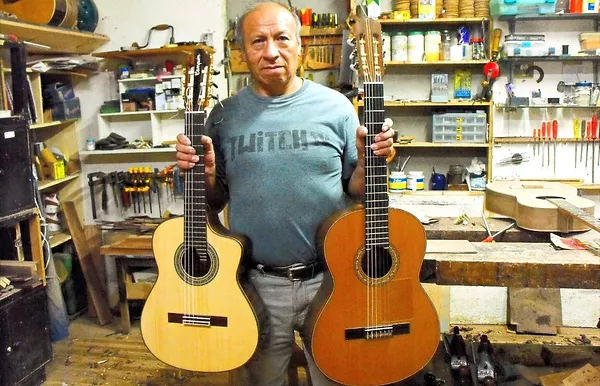
A prestigious brand of musical instruments is Uyaguari-Quezada. It has the support of the experience and professionalism of a family of luthiers, which for 4 generations has been dedicated to the construction mainly of the classic guitar. The ancestor of the Uyaguari family comes from the parish of San Bartolomé, "the cradle of guitars", in the canton of Sígsig. The artisan workshop is located in their house, Arquímedes street, Bellavista neighborhood, Cuenca. There, Luis Enrique and Pablo Andrés work together, making beautiful guitars. Pablo is the fourth generation of a family dedicated to the construction of stringed instruments. His father Luis, a craftsman since he was 13 years old, is the third of eight children of Julio Uyaguari, a native of the Sigsillano neighborhood. The "dynasty" would have started with Isidoro Uyaguari, Luis' grandfather. An anecdote tells that one day Isidoro disassembled a guitar to understand how it worked. That moment was the beginning of the family tradition. Art, passion, professionalism, tireless dedication, identity, creativity. These are the opinions of those who have visited the Uyaguari-Quezada workshop, describing their instruments as "authentic wooden jewels", delicate, subtle, moving. Although the Uyaguari specialty is classical guitars, they also make charangos, tiples, bandolas, bandolines. In other words, they are authentic luthiers in the original sense of the word. They use the most noble raw materials: capuli, cypress, teak and walnut. The sound of a guitar is defined by the soundboard. The two craftsmen dedicate more time to this piece, since the perfection of the instrument depends on it. Another skill that only gives the knowledge of the trade is the sensitivity through touch, to judge if a guitar is worth or not. Father and son are music lovers, the result of their work. They love Ecuadorian music, Cuban trova, the new Latin American song and rock. A luthier is a person who builds, adjusts or repairs stringed instruments such as guitars, cuatros or lutes. Today this name is extended to any artisan who repairs musical instruments in general, including wind and percussion instruments. A word of French and Arabic origin, meaning "wood".

The lookout building of 7 floors and 42 meters high is the main attraction of the Parque de la Libertad, Bellavista neighborhood, north of the city of Cuenca. From its top floor there is a 360 degree view of the city. Inaugurated in November 2018, it has become a very busy place, competing in popularity with the Mirador de Turi, the hill of Cullca or the Parque de la Luz. It has an elevator service and a craft shop. It has an attached platform that also serves as a lookout point. In the basement of this pizzeria and ice cream shop services. There are also spaces for conferences and other activities. The Libertad Park has 1.5 hectares of green area decorated with grass, flowers, small trees, a network of paths, a public swimming pool, street furniture and children's games. The Park was located in the former grounds of the former men's prison of Cuenca and of the Municipality's warehouses. The designation "La Libertad" was due to its opposition to the situation of confinement that the people of the old prison were living in. The prison building was transformed into a citizen service center with a pharmacy, a municipal payment window, bank tellers, a restaurant, a movie theater, an audio room, an internet room, a games and reading room, and public bathrooms.

The Piazza de La Merced is a small esplanade of 1,500 m2. It is the center of an intense social life, especially at night, in the Historical Center of Cuenca, a city declared a World Heritage Site by UNESCO. The square is delimited by the streets Borrero, Honorato Vásquez and Calle Larga. But the neighborhood, of the same name, also keeps a lot of history. The piazza is a space adapted for pedestrians and bicycles. All kinds of cultural, social and artistic activities can be carried out there. It is a space for recreation and meeting of citizens. It has good lighting at night. The piazza preserves several examples of heritage trees, including a poplar and several jacarandas that, when they bloom between September and November, fill it with color. A statue of the priest Julio Maria Matovelle dominates the center of the piazza. This famous priest was a teacher, lawyer, literati, historian, politician and founder of the Congregation of the Oblate Mothers of the Sacred Heart of Jesus and Mary. The construction of the small square began around 1850, as did the church. The La Merced neighborhood is traditionally a sector of workers with a strong religious character. However, today the nightlife is intense in La Merced due to the development of activities such as offices, bars, restaurants, discos and hotels. The Remigio Crespo Toral Museum, the La Merced Church, the old house of the Workers Alliance, the Santísima Virgen del Río Chapel, the Julio María Matovelle Educational Unit, and the Abraham Lincoln Cultural Center are all located in the vicinity.

Homero Ortega is the brand name of an important producer of hats and other toquilla straw articles in the city of Cuenca. For 120 years and five generations, the Ortega family has given continuity to this economic activity, making it the oldest and most experienced organization in the export of straw hats. In 2012 UNESCO inscribed the Traditional Ecuadorian Toquilla Straw Hat Weaving Technique on the list of Intangible World Cultural Heritage. The factory has been based, since its creation until today, in the urban parish of El Vecino, in the city of Cuenca. Homero Ortega is its founder, linked to this work since he was a child. He learned the business from his father Aurelio Ortega García. In the beginning, together they ventured through the dangerous route of "El Cajas" to Guayaquil. In the port they sold hats to merchants who took them to Panama on ships. During the 20th century, the company consolidates and grows. Its success is based on the capacity to adapt to the different scenarios of the world market, to the conception of the toquilla straw hat as a manifestation of the popularity and the production with quality. An outstanding element of Homero Ortega is the Museum "The Magic of the Hat", open to the public since 2008. It was the concretion of a project of public diffusion of the history of the toquilla straw hat as a handmade product in Ecuador. The Museum has three rooms: the history of the hat, its elaboration and the trajectory of the company. Visitors enjoy an interactive experience. One of the most photographed and recognized prints is the toquillera artisan that demonstrates how the hat is woven. The Museum is a member of ICOM, a UNESCO partner institution. Some historical data of the permanent exhibition of the Museum are the following: the Azuayan businessman Bartolomé Serrano had the initiative to teach the hat weaving to the artisans of Azuay and Cañar in 1835, through weavers of the city of Montecristi, to face a strong economic crisis; the toquilla straw hat was the number one export product of Ecuador between 1944 and 1946; the first exports took place in the middle of the XIX century from Manabí; from Cuenca the exports began in 1890.

The Municipal Economuseum "Casa del Sombrero" has four permanent exhibition rooms where visitors can appreciate the art of weaving the toquilla straw hat through videos, photographic representations, objects and materials used over time for this artisan work , practiced since pre-Columbian times. It has two exhibition rooms and sales of hats and articles made of toquilla straw.

A walk through the workshops and museums of the toquilla straw hat, curiously worldwide known as "Panama Hat", will make you discover that in fact it is original from and elaborated in Ecuador. One of the regions where it is woven is in the Ecuadorian Southern Andes, in the provinces of Azuay and Cañar. On December the 5th, 2012 UNESCO declared the traditional knitting of the toquilla straw hat as Intangible World Heritage. In order to recover the historical memory of this handicraft the Municipal Museum-Workshop “Casa del Sombrero” (House of the Hat) was inaugurated in 2014, in the city of Cuenca. It is located is in an old and emblematic house that functioned as a factory of hats. The initiative is public and free to enter. The elaboration of the hat was the economic foundation of the Ecuadorian population, especially in the south of the country, during the 20th century. Private initiatives also contribute to keep spaces where the story of the Toquilla straw hat is told. The first is the “Hat Museum” of the Paredes Roldán family (Calle Larga and Padre Aguirre, Historic Center, Cuenca, Ecuador). The factory continues operating on the site and the visitor can buy a custom-made hat. The second space is the Museum “La Magia del Sombrero” of the Homero Ortega company (Avenida Gil Ramirez Davalos 3-86, behind the Land Terminal, Cuenca, Ecuador). In 1830 the hats were commercialized in Panama. The Ecuadorian hat gained popularity because of being: resistant, light weighted, foldable for storage, combinable with light summer clothing and because of allowing sweat to evaporate. When the Panama Canal was constructed the workers used it and in 1903 a photograph of the President of the United States, Teddy Roosevelt, wearing this hat during a visit to the canal was widely publicized, which gave rise to the name of “Panama hat”. All this history and industry is based on the work of thousands of artisans and weavers who live in the small towns near Cuenca, such as Chordeleg, Gualaceo, Sígsig, Azogues and Biblián. The hat is also known as the “Jipijapa hat” or “Montecristi hat”, towns at the Ecuadorian Pacific coast that were the original centers of its elaboration.

Interest:Culture Type : Manufacturing Industry Friendly with: children, families, seniors, disabled Relevant categories: Historic Center of Cuenca, Cultural Heritage of Humanity UNESCO - Within the Macizo del Cajas Biosphere Reserve UNESCO - Within Cuenca, National Cultural Heritage of Ecuador Hours : Monday to Sunday 08:00 - 18:00. Variable hours on holidays. The Ivan Encalada Pottery Workshop is the heritage of a pottery tradition that is located in the district of La Convención del 45, a typical place in Cuenca (Ecuador) for its craftsmen dedicated to pottery. The tradition was started in 1962 by his father José Encalada, when he opened the business that has always been located in Mariscal Lamar Street, in the family's house. José started his pottery apprenticeship in 1948. His teachers were Juan Arias and Miguel Pacheco. He needed to learn a trade to make a living. His son Ivan has become, over the years, his best student and assistant. The Encalada family home is also a centre for displaying the products and works of Ivan and Jose, utilitarian objects such as jugs, glasses, plates and pots or pieces of undeniable artistic value. It is also a museum-workshop to observe first-hand the work of the master potters on a standing lathe or to learn the elaboration of ceramics by means of the ancestral "black" technique, of millenary Cañari (a pre-Inca culture) roots. For José Encalada, the support of all his family has been important for the maintenance of the workshop. His wife Yolanda Arias and his daughters and sons have taken part in this project. Father and son are constantly concerned about the fate of the trade. That is why they have thought it convenient to teach the public the process of producing a ceramic object. On the other hand, they have had the initiative and have participated in organizational processes and in the aggregation of the potters of the neighborhood, with the foundation of the Guild of Potters and Ceramists, with the objective that this activity is not lost. Another space that gives identity to the sector is the Casa del Alfarero, managed by the Municipality of Cuenca as a Cultural Center and a place for community meetings and the people of the neighborhood. The neighborhood of The Convention of '45 was created during the course of the 19th century, as an artisan's neighborhood. It was one of the multiple dismemberments of San Sebastian, one of the 3 great parishes that Cuenca had after its foundation, besides El Sagrario and San Blas.

Cuenca stands out for our variety and quality of handicrafts. Rotary Square is a traditional place where you can buy countless forms of handcrafted items. For many years, Cuencanos have acquired their household items here: furniture, ceramics (flowerpots, vases, crockery), wrought iron (crosses, agricultural tools, plant stands), natural fibers (baskets, fans, etc...).

The museum displays materials and tools for the jewelry work. It is located in a cultural heritage property. The craftsman in charge performs live demonstrations of the process as well as allows the visitor to interact and be part of the making process

Gran Colombia Street is the center of a dynamic commercial, artisan and cultural activity in the city of Cuenca. Known as the "Jewelry Street", it is also home to a museum dedicated to the work of the goldsmiths In a few blocks, you can find shops selling ceramics, clothing, embroidery, leather goods, and crafts in general. The jewel in the crown are the enterprises dedicated to the design, elaboration and commercialization of jewelry. In just two blocks and in a few minutes, it is possible to visit at least 10 jewelry stores with objects of the highest quality made by Cuenca craftsmen. And in the surroundings there are other 10 additional points of sale. To get an overview of this artisan work, one option is to visit the Museo de la Joyería Cuencana. It has a section that recognizes the trajectory of outstanding jewelers of the city. Another section exhibits tools and techniques used by the goldsmiths. In the workshop you can appreciate the process of elaboration of the jewels. The circuit is completed with the exhibition and sale of finished products. The city's jewelers are organized in an Association, which brings together about 50 artisans. In Azuay and Cuenca, the history of jewelry making goes back thousands of years. It is a heritage of the Cañari culture. In the pre-Inca period, the notions of art were established. The Cañari tradition was fused with the knowledge of the precious metals of the Incas. Later, during three centuries, the ancestral practices were mixed with what the Spaniards knew and their methods of extraction and production. The "Calle de las Joyerías" is currently the best showcase to observe the progress and development of this Cuenca craft. Foreign techniques have allowed the industrialization of the processes. The small artisan workshops have adapted to this change. The Great Colombia, named after the ephemeral unit created by Simon Bolivar, must be walked slowly. The objective: to pay attention to details. The architecture of their houses. The options open in their shops. Today it is the backbone of the Cuenca Tramway.

The Tomebamba River Ravine is the natural southern limit of the Historic Center of Cuenca (Cultural World Heritage Site by UNESCO). The ravine is part of a bio-corridor with unique characteristics that crosses the city. In this place, history and culture are united with the landscape and architecture. The Viceroy Andrés Hurtado de Mendoza ordered, in the middle of the 16th century, that the city of Cuenca be founded with the same name as his hometown in Spain. At present, both cities are sisters and both have a ravine with similar qualities. The Tomebamba’s Ravine has an extension of two kilometers. It begins in the Vado neighborhood and ends in the Pumapungo Museum and Archaeological Park. It is possible to walk along the Ravine in an integral way, by any of the two margins of the river. But along the margin of Paseo Tres de Noviembre, you can also travel the ravine by bicycle. Points of interest in the Tomebamba’s Ravine, for postcard photos, along the way are: the Casa de los Arcos, the descent of the Centenario Bridge, the Ordóñez family house, the old Hotel Crespo, the Remigio Crespo Museum, the CIDAP (Interamerican Center of Popular Arts), the stairs of the Parque de la Madre, the church and neighborhood of Todos Santos, the Broken Bridge and the Pumapungo Museum and Archaeological Park. Through several pedestrian and vehicle bridges, the historic city on the side of the Tomebamba River Ravine, is linked to the new city on the other side of the Tomebamba River. A relatively recent place is the Alameda 12 de Abril, a tree-lined walk that allows one to observe and photograph the Tomebamba River Ravine from a greater perspective, while walking between the Centenario Bridge and the Todos Santos Bridge. A romantic myth idealizes the Tomebamba River Ravine. There is a belief that its landscape and nature are an inspiration for poets, musicians, photographers, lovers and visitors. But without a doubt those who enjoy walking it, marvel at its hanging houses, the abundance of birds and the diversity of species of trees and plants. It also attracts the tranquility provided by the sound of the waters of the Tomebamba River. Today it is possible to stop the walk and enter one of the bars or restaurants open in the area to enjoy excellent food, a refreshing drink and beautiful panoramic views of the new city. The Barranco is a must see in Cuenca. It allows the realization of sports, artistic or outdoor activities. During the 70's and 80's of the 20th century a trade was developed in the Tomebamba River Ravine, the washerwomen. Women who went down to the riverbank to wash clothes. Another typical activity that was lost due to the over exploitation of the resource, is fishing. Decades ago, during the season, the people of the valley would come down by the thousands to the ravine to collect fish from the river waters. The Tomebamba river is the city's main water resource. It is born in the lagoons of the Cajas National Park, a source of drinking water. The Tomebamba River is a tributary of the Paute River where, downstream, in the middle of the Eastern Andes, the largest hydroelectric dam in Ecuador operates.

The church and square of San Sebastian constitute the western limit of the Historical Center of Cuenca (World Cultural Heritage Site by UNESCO). They are the main points of the historic neighborhood of the same name, in the urban parish of San Sebastian. The San Sebastian neighborhood is traditionally full of popular trades: pottery, tailoring, carpentry, tile-making, buttonhole making, painting. Tourism has a remarkable development with hotels, restaurants and cafeterias installed in heritage houses. The charm of its church, the park and an intense cultural life due to the presence of the Museum of Modern Art are the main attractions. There are craft workshops such as the embossing workshop of the master Carlos Bustos, several craft shops and bakeries. Recently, in a corner of the park, there is a restaurant owned by a Cuenca-Belgian couple that offers beer produced in the town. Every year, on December 24th, the "Pase del Nino Viajero" (The Traveler Baby Jesus), a traditional parade celebrating the birth of Jesus, starts from San Sebastian. The church, on the outside, has a single tower that dominates the facade. This is an unusual feature in religious architecture. Its main door is made of carved wood, with reliefs of the Bible's testaments. A large dome also stands out in the structure of the church. The interior of the Catholic temple is divided into three naves, separated by wooden columns. The space is quite sober, without as much detail or decoration as in other similar buildings in the city of Cuenca. On the corner of a small square in front of the temple's facade, at the intersection of Calle Bolívar and Calle Coronel Tálbot, stands the Cross of San Sebastián. Formerly this cross was the mark of the end of the city and the departure point towards the west. There are news of the church and its corresponding sector since the first years of Cuenca's foundation. It was a hermitage or small church of Fabián and Sebastián, saints and martyrs. As the centuries passed, the name of Fabián was abandoned, leaving San Sebastián as a traditional "Indian parish". Racial and social separation established by the Spanish colonizers to name a place that concentrated humble but necessary trades for daily life. The San Sebastian park is located next to the church. It has an ornamental pool and an interesting variety of trees and plants. The park is ideal for short walks, to rest and breathe fresh air. In its centre is the bust of the poet Miguel Moreno. In front of the park, on the opposite side of the church, is the Museum of Modern Art. Two historical events took place in San Sebastian Park. The first was the murder of the doctor Juan Seniergues, a member of the French Geodesic Mission (a scientific mission to measure Earth’s circumference), in 1739, during a bullfight. The second event are the first football matches in Cuenca, which were played there at the beginning of the 20th century. The geometric layout of the square, which has Renaissance influence with parterre gardens in the Versailles style, is attributed to Octavio Cordero Palacios.

The beer culture of Belgium has its sanctuary in Cuenca, Ecuador. A small establishment in the San Sebastian Park, is cozy and ideal for a refreshing beer or fast food: "Jodoco Belgian Bistro". The place is the result of a dream. The Ecuadorian-Belgian couple formed by Paola and Carlos arrived in Cuenca in 2012 and set up the tavern. They sell handcrafted beer made by the brand Derijcke Cerveceria following Belgian recipes. The name of the bistro and beer bar is a tribute to Fray Jodoco Ricke, a Franciscan religious of Flemish origin, founder of the Escuela Quiteña de arte. He built the Convent and Church of San Francisco, created the San Andrés School of Arts and Crafts and planted wheat for the first time in South America. He started the first brewery in Latin America. He arrived in Quito in December 1535. The traditional drink of Belgium is beer. Jodoco Bistro, located in a historical and pleasant environment, invites you to discover flavors and atmospheres from the other side of the Atlantic. Its tables are located overlooking the park and the church of San Sebastian. It is a bohemian place, with surprising culinary wonders: the cheese or meat tapas. San Sebastian Square is characterized by its tourist development with the Museum of Modern Art, the Larrazábal Gallery and service places such as restaurants and hotels. It also has a place in the history of Cuenca. In 1739 Jean Seniergues, a doctor from the French Geodesic Mission, was lynched there. In 1820, the patriots of Cuenca who rose up against Spanish rule on November 3rd retreated there. An artisan beer is brewed with its own recipe by a master brewer. That's why it has a different taste to the industrial one. Of limited production, it pays attention to flavors and textures. It does not contain artificial elements, the fermentation is natural and the flavors are the result of the mixture of water, malt, hops and yeast; fruits, spices and herbs can be added. Flavor combinations depend on consumer requirements. It offers quality, diversity and personal attention.

The San Luis Seminary, built in Republican style, is another of the emblematic buildings that surround the block of the Central Park or Abdón Calderón de Cuenca (UNESCO World Heritage Site). Also known as Major Seminary or Seminary College, it is a symbol of the influence of the Catholic Church in this city. It is administered by the Curia. In the center of the building there is a beautiful chapel, with reserved access. At present the Seminar’s rooms are mostly occupied by restaurants, cafes and craft shops. There is a Catholic radio station, offices of the Laity Pastoral and training rooms. From its main courtyard, the domes of the New Cathedral have a different, magnificent perspective. The Seminary represents a time of economic boom and important changes of the 19th century. It was the new image that the city assumed, due to the introduction of European models of architecture. The export of toquilla straw hats was booming and with the resources it generated, monumental works like this Seminary were undertaken. Construction began in 1867, under the direction of Mera from the capital city of Quito and the Frenchman Grevilliers. They introduced in its design the traditional portals. The San Luis Seminary occupies a complete block between Bolivar, Benigno Malo, Santa Ana and Padre Aguirre streets. For a long time, the building was the only center of higher education in the city. It was home to educational institutions such as the San Luis School, the only one in its time in Cuenca, to the Borja School and to the Catholic Educational Community. In 2013 this jewel of the region's architecture was on the verge of disappearing, due to a fire. The Ecuadorian state took charge of its restoration. Today, completely restored, it is the center of intense social, cultural, commercial, artisanal and gastronomic activity.

The facade of the Cloister and Church of Carmen de La Asunción is one of the most interesting places in the Historical Centre of Cuenca (World Heritage Site by UNESCO), due to the colorful images it generates together with the Flowers’ Market. The order of nuns of El Carmen or "Carmelitas Descalzas" (Barefoot Carmelitas) was established in the city of Cuenca in the year 1682. The Monastery occupies the inside of the block opposite where the New Cathedral stands today. The most representative feature of this cloistered monastery is the wood-turning lathe, which is fitted into a hole in the wall next to the entrance door to the convent. It is used to pass objects from the outside to the inside and vice versa, without the people who give or receive them being seen. In other words, the lathe is an intermediary object between the cloister and the outside world, the means of communication between the contemplative and profane life. A few steps away from the wheel is a picture of the "Lord of Justice", which the Catholic faithful use to ask for divine intervention when they believe that earthly justice has failed them. People come to the wood-turning lathe to ask for spiritual advice. On the lintel of the entrance door to the monastery one can read "This is God's house and the door to heaven". People also go to the wood-turning lathe or to the humble shops next to the entrance of the house, in search of artisan products made by the Carmelites with medicinal plants and flowers, which they cultivate in the gardens of the cloister. They have a natural apothecary's shop. The "agua de pítimas" is the most popular. After drinking it people ask for a "piti más" or a little bit more. Other products are: red, white, blackberry and passion fruit wine, radish syrup, multivitamin syrup, lotion for muscle aches, pigeon jelly, lemon cream, cakes and snacks. The convent houses mural paintings, the most important in Cuenca and one of the most outstanding in America, sculptures and an enormous cliff or birthplace of Jesus. It is an authentic museum of religious art. The Carmelites are in charge of preserving the image of the "Traveler Child ", a sculpture of the newborn Jesus, and they also embroider his clothes by hand. This representation of Jesus Christ as a child presides every year, on December 24th, over the Pase Mayor or "Parade of the Traveler Child". The construction of the Church of Carmen began in 1727. It has a portal with Solomonic columns. It is small, with only one nave.

Santa Ana Street, flanked in all its extension by the moles of the New Cathedral and the old Seminary, is the exact point where the city of Cuenca began its development, half a century ago. On the 12th of April 1557, a small group of 30 people, gathered in what was the only street of the place, next to an irrigation channel, solemnly founded the city, which is now a World Cultural Heritage Site. Unfortunately, the memory of the street fell asleep. The space of this one was occupied during decades for other tasks. Abusive characters ended up walled up by means of arbitrary measures and it became the extension of an educational center, during a large part of the 20th century. Fortunately for the history of the city, Santa Ana Street, named after the mother of the Virgin Mary, was rehabilitated for pedestrian traffic. It is a beautiful cobbled passage in the middle of the block, connecting from east to west Benigno Malo Street with Padre Aguirre. For the people of Cuenca, the street is a symbol of identity and of the rich heritage of the city. Reopened in 2017. Since then it has quickly become an important tourist attraction in the Historical Centre. Those who decide to walk through it must do so slowly. This is the only way to capture details such as the stained glass windows, the exposed brick or the sculptures of the New Cathedral on one side; the offers of shops, restaurants, cafes and the architecture of the old Seminary on the other side. During the restoration of the street, two archaeological windows were opened, for the observation of vestiges, like the first drains of the Cathedral or an old well. The latter was converted by the citizens into a "hole of desire". They throw inside it coins of different denominations or letters.

The Calderon Park, since the foundation of the city four and a half centuries ago, is the heart of Cuenca, the central point of its social, political and religious activities, or a silent witness to its most relevant historical events. It has been called Abdon Calderon Park since 1932, when the cast bronze statue of the "Héroe Niño" was located, which is eternally guarded by the giant Chilean araucarias, planted in 1875 by former president Luis Cordero. Its name evolved with the city, called Plaza Pública at the beginning of this one, then it became Plaza Grande or Mayor, Plaza Principal y de Armas, Plaza Vargas Torres at the beginning of the 20th century. Its benches are a meeting place for retirees, students or all kinds of walkers. It is a working place for photographers, street musicians, craftsmen, shoe shiners, newspaper and magazine sellers. Its gazebo is the stage for various cultural and political events or the secret accomplice of lovers. It is also famous for its portals that offer shelter from the rain or a hot sunny day or the design of its trees and flowers in geometric flower pots. The marble facades of the Palace of Justice and the New Cathedral stand out in the Park. Every year it is the venue for authentic popular festivals. The first established with the Cuenca Foundation is the "Septenario" in the month of June - 7 days of celebration in honour of the Body of Christ or "Corpus Christi" - which is manifested by the sale of sweets in traditional stalls on the paths around the park, fireworks called "castles" and "mad cows" or the raising of hot air balloons. Thousands of citizens gather every night, for 1 week, to watch the show. The second one is known as "El Pase del Niño Viajero", which takes place every December 24th. Center of the power, the Park in its surroundings lodges the main public buildings of political, judicial, religious, cultural and commercial institutions: the Old Cathedral, the house of the Family Ordóñez Mata, the Governor's Office of the province of the Azuay, stores Juan Eljuri, Vatex Galleries, Tosi House, the Old Seminary, the New Cathedral, the House of the Culture, the notaries, the Municipality of Cuenca, the Superior Court of Justice, BanEcuador. In recent years, the Calle Santa Ana, which is part of the original layout of the city, was reopened to tourism.

It is said that the Cathedral of the Immaculate Conception, in Cuenca, Ecuador, is as big as the faith of the “Cuencanos”. It is also called the New Cathedral or simply the Cathedral. It is a catholic temple and the largest building in the city of Cuenca, which is World Cultural Heritage declared by UNESCO. Legend has it that when Bishop Miguel León ordered its construction, at the end of the 19th century, he would have expressed "I want a cathedral as big as the faith of my people". In the city of Cuenca, the third city in development of the Republic of Ecuador after Quito and Guayaquil, the religious fervor of its citizens can still be seen today. In its Historical Center more than 25 churches can be counted, sometimes up to two by each neighborhood, which is why it is also called "the city of the clergymen". The particularity of the presence of two churches in the same block or neighborhood is manifested in the Central Park of the city. In front of the New Cathedral there is the Old Cathedral. From its tower, the Franco-Spanish Geodesic Mission of the 18th century would have made the measurements that led the establishment of “metro” (meter) as a universal measure. The construction of the New Cathedral began in 1885 and ended 90 years later in 1975. It constitutes the great architectural attraction of Ecuador because of its size, at the same level as the Basilica of the National Vote in Quito city. The blueprints of the temple were designed by John Baptist Stiehle. Its two main towers have a characteristic truncated finish and one of the best panoramic views of the city. The cathedral marks the heart of Cuenca city, where 4 UNESCO’s awards coincide: the city’s historic center, the toquilla straw hat or "Panama hat" and the Camino del Inca (Inca Trail), which are World Heritages, plus the vast massif that includes the territory of the city which is a Biosphere Reserve.

The Carlos Bustos Embossing Workshop is located in the urban parish of San Sebastian, just a few steps from the main square of the main historical sector of the city of Cuenca (UNESCO World Heritage Site). In this section of Coronel Tálbot Street it seems that time has stopped. Low houses, made of adobe (a clay-based building material), many of which remind us of the city of yesteryear. In this workshop, with the craft technique of embossing, they work on sheets of different types of soft metals, leather or other ductile raw materials, in order to achieve reproductions of images in relief. Carlos Bustos comes from a family of tinsmith artisans. His father and brother were dedicated to this trade. But he, 40 years ago, decided to go his own way. He was a student of the artist Edgar Carrasco, from whom he learned the basics of art and working with metals. When he gained experience, he decided to open his own workshop. The work begins with drawing what he wants to do. Then with his hands and a lot of care, he uses simple tools to do his job, such as screwdrivers transformed into profilers, hammers, brushes, rollers. An embosser resorts to the technique of the "negative", by means of which, with the forms drawn backwards of the plate of chosen material, that settles on a soft surface and little by little, by means of a progressive deformation of the worked surface, the relief is obtained. Finally, he turns the piece over and outlines the details to define the shapes. Bustos is a tireless creator and owner of infinite patience. In his workshop the most varied objects are exhibited, well decorated: crosses, paintings, masks, lamps, lanterns, candlesticks, animal figures, mirror frames, among others. His favorite materials, because of their low cost, are aluminum, brass and tin. The prices of his embossings vary according to the time it took him to make them and their size. The visitor can ask for a test of skill in this place: to make his own embossing. If you are in a hurry to visit Cuenca, you might miss this charming place. Attention to detail is necessary, as the workshop is small and can go unnoticed between the Museum of Modern Art and the staircase leading down to the Plaza del Otorongo.

The Municipal Museum of Modern Art (MMAM), has a prestigious and solid cultural background. It is located in the Historical Center of Cuenca (Ecuador), a UNESCO World Heritage city. The Museum temporarily exhibits modern art works by contemporary national and foreign artists. The rooms of the Museum are permanent headquarters of the International Art Biennial. Its reserve holds a large pictorial collection, which has been growing for 40 years. In addition, the Museum runs a program of activities and dissemination of art, dedicated to children, youth and older adults. The Museum was inaugurated on August 1, 1981. It was Hernán Crespo's initiative to recover the house from its destruction and restore it. The history of its use over the years is curious. Bishop Miguel León ordered its construction in the 19th century, as a refuge for alcoholics or "Casa de la Temperancia” (House of Temperance). It later served as a men's prison, nursing home, children's home, work school, and health center. The architecture of the building is old, with institutional purposes. Its doorway is in the neo-Gothic style. The interior is organized around an old chapel, in the center of the Museum. Around it there are several courtyards with portals. The chapel has a mural painting by Nicolás Vivar where a large painting with the parable of the prodigal son stands out. The First International Painting Biennial of Cuenca was inaugurated in 1987 in the Museum of Modern Art. It was conducted by Eudoxia Estrella, the first director of the MMAM. The Museum has an Art Reserve. It offers the service of workshops. The Information Office displays a collection of posters of the exhibitions held and the library specializes in art.

The Old Cathedral or Iglesia del Sagrario is an emblematic building in the Historic Center that marks the south-east corner of Calderon Park. It is considered to be the oldest building in Cuenca. The church was planned since the very moment of the city’s foundation in 1557, when the original layout designated a block of land to build it. Its foundations were built with carved stones from the Cañari-Inca city of Tomebamba. Some milestones are part of the history of this church. For example, the building work took three and a half centuries, between extensions, adaptations and ornamentation works, always counting on the contribution of the city's inhabitants. It was finished in 1924, with the mural painting of the artist Nicolás Vivar. Another important event occurred in the 18th century, when the French Geodesic Mission of 1736 used the church’s old tower to measure the arc of the earth's meridian. A commemorative plaque, attributed to the Colombian sage Caldas, says "Tower more famous than the pyramids of Egypt", in reference to the Geodesic Mission. The first public clock was installed in the bell tower overlooking Sucre Street in 1751. And the first bellows organ in the city, which still exists today, was mounted in the church choir in 1739. Another very singular fact is that Cuenca is one of the few cities in Ecuador, if not the only one, that has two cathedrals one in front of the other: The New or Immaculate Cathedral and the Old Cathedral. For some decades the Old Cathedral stopped being used for regular religious services and after its most recent renovation in 1999, it became a Museum of Religious Art and a place for concerts and cultural events. Its art collection includes sculptures by Miguel Vélez and Gaspar Sangurima and paintings by Daniel Alvarado, Nicólas Henriquez and Rafael Vivar. In addition, it is possible to admire the original model of the New Cathedral, work of Juan Baustista Stiehle, exposed in one of the chapels of the Church and through an archaeological window it is possible to observe the ossuary in the subsoil of the temple. In the house of the canons there is a permanent exhibition of old photographs of Cuenca. The Old Cathedral offers guided tour service for visitors.

Interest : Culture Type : Historic House Friendly to : children, families, seniors, handicapped, pets Relevant categories : Cuenca's Historic District World Cultural Site by UNESCO - Within Cajas Massif Biosphere Reserve by UNESCO - Cultural National Heritage by the Ecuadorian Government Hours : Monday to Friday 09:00 - 18:00, Saturdays 09:00 - 13:00 The building of the Mayor's Office of Cuenca belongs to the select group of patrimonial constructions that are the pride of the inhabitants of the city. Luis Donoso Barba built it for the headquarters of the Banco del Azuay, an entity that operated there from May 24, 1929 until its liquidation in 1999. Due to the façade of this building, in addition to the façades of the Superior Court of Justice, the New Cathedral and other houses in the historical center, the city is known as the "city of marble". In 2002, the Municipality of Cuenca received the building as a donation. It has an area of 2,500 m2. The ground floor is occupied by a gallery for artistic exhibitions. On the second floor there are the offices of the mayor, vice-mayor, the alternate room for the councillors, the secretary, the trade union and the financial management. The neoclassical-style building, without an internal courtyard, has spacious halls connecting various rooms. On the second floor, the brass ceiling stands out. It is undoubtedly one of the best examples of the French influence on Cuenca's architecture in the early 20th century. Its architect fulfilled the intention of its owners: to reflect greatness, luxury and economic power. The now disappeared Banco del Azuay was the first in Cuenca. Founded in 1913, in 1914 it became a pioneering entity when it printed the first Ecuadorian 1, 2, 5, 10 sucres banknotes.

The facade of the "Palacio de Justicia" (the Palace of Justice or Courthouse) in the city of Cuenca occupies one of the corners of the Calderon Park or Central Park. It is an emblematic building. Along with the New Cathedral, the City Hall and a group of houses in the Historical Center, they have made "the city of marble" another name well earned by Cuenca. In addition, this building is part of the area declared by UNESCO as a World Heritage Site. The symbolic meaning of the structure of the Courthouse is important in the urban area, because it was built between 1914 and 1925 as the headquarters of the University of Cuenca. So, for a long time, the building’s main function was to generate knowledge, education and culture. Today its lobby is used for cultural and social events, with main access to the Sucre Theater. Although its architectural style is neoclassical, the materials used to build it are of diverse origin, an eclectic combination of Sayausí marble, bricks produced at El Tejar, polychrome brass for the ceilings imported from France, and colored glass brought from Belgium. The humanist Octavio Cordero Palacios was appointed by the University Board as director of the work, based on the designs of the Quito architect Francisco Espinoza. Around 1950 and after 25 years of operation, the property was sold to the Ecuadorian state. The State assigned it to the Judicial Function, and it was named "Palace of Justice". It houses the Provincial Court of Justice of Azuay. The marble, the dome, the cornices, the giant columns, the heraldic shields, make its facade very striking. That is why it is one of the most photographed buildings in the Historical Center of Cuenca, a World Heritage Site.

The Centro Municipal Artesanal (CEMUART)-Casa de la Mujer, promotes the fair commercialization of Cuenca's artisan products, since 1998. CEMUART is located in an old patrimonial house, in front of San Francisco Square, in the Historical Center. Inside, there are more than a hundred commercial premises with all kinds of handicrafts. Tourists can find almost the entire range of souvenirs to take home to family and friends. Toquilla straw hats, silver and gold filigree jewelry, textiles, wood carvings, ceramics, basketry, tagua, Andean musical instruments, glass, leather objects such as belts, bags and wallets, etc. A special place to find a gift, all under the same roof. The name Casa de la Mujer has its origin in the need to emphasize the important role of women in the artisan trades and their ability to perform them as a life option and to maintain their homes. Although the site is very well located and easily accessible, organized craftsmen and women take advantage of holidays and important dates in the city to hold outdoor fairs in much more central locations such as the block of the Cathedral, Sucre Street and Benigno Malo. CEMUART is an encounter with design, color, variety and cultural influence from all over the world. Its craftsmen and women are duly qualified. The cultural richness of Cuenca exhibited in these small stands puts something for all tastes within reach. The interior courtyard and its premises are covered. Buying handicrafts has this comfort even on rainy days. A nice feature is the dialogue that the visitor can initiate with the artisans, while watching their work and products. When people visit Cuenca, they want to know where they can find a souvenir. Bring a little culture. If there is no time to shop, you should go to the Casa de la Mujer. It's an option that could save a long walk around the city.

Buying flowers was never as beautiful as in “Plaza de las Flores” or Cuenca's Flowers Market, World Heritage Site by UNESCO, in Ecuador. It is one of the most emblematic and outstanding urban spaces of the Historic Center of that Andean city. The market is a free space for pedestrians and it is surrounded by important buildings, such as the Church of Carmen, where the Divine Traveler Child (Divino Niño Viajero) is venerated, the Convent (cloister) of Carmen and the Cathedral of the Immaculate Conception. But the real standout attraction in the Plaza is its flowers market, which makes it a charming place. In 2014, the uniqueness of the market placed it in the Top 10 of the most beautiful outdoor flowers markets in the world, denomination granted by the international magazine National Geographic. The offer that can be find here is diverse, but mostly you will find roses, orchids or lilies. There is a dozen of tents that stand out by the explosion of the colors, the variety of flowers and aromas and the kindness of its merchants. Other destinations with which the Flowers Market of Cuenca can be compared are: Marché Aux Fleur (France); the Bloemenmarkt (Netherlands); Campo Dei Fiore (Italy); The Adderley Street Flower Market (South Africa); the Phool Mandi (India); and Pak Khlong Talat (Thailand). The Carmen Church, which is part of the architectural complex of the Monastery of Carmen de la Asunción, next to the Plaza, is one of the majestic religious structures of Cuenca. It has a stone carved facade, which constitutes a magnificent example of Baroque art in the city, and inside it has a renaissance-style wooden structure, in which you can see interesting sculptures. The nuns of the cloister of the Carmen prepare medicinal drinks with flowers that are sold to the population in the stores that are next to the Market.

San Francisco Square is located in the Historical Center of Cuenca and contains three spaces of very dynamic social relations: The Square, the Church, and the Little Square. The Plaza of San Francisco is important for the history of Cuenca, since 1558, one year after the Foundation, Gil Ramírez Dávalos destined this site as a public space for the exchange and sale of agricultural products or "Plaza de la Feria". Therefore, the use given to this Plaza was never changed over the centuries. For 60 years, stalls selling all kinds of clothing have been located here. The artisans of Otavalo are very popular in San Francisco. They come from an aboriginal ethnic group from the province of Imbabura in the north of Ecuador. They for sale in the portals products such as ponchos, scarves, hats and shawls, articles woven with alpaca or llama wool. It is a unique place, full of color and interculturality, where it is possible to resort to an ancient custom, the "bargaining". The current commercial use is mainly for non-perishable products: clothes, shoes, household items, etc. In 2019 the Square was reopened, after undergoing modernization works, with the expansion of public space and the relocation of the stalls of 120 vendors in the side areas. A water fountain, new lighting, street furniture and obstacles to the view were removed in order to improve security. Visitors to the Plaza San Francisco can now move around more comfortably for cultural, religious or craft tourism. The Pasaje León, the Casa de la Mujer and the Centro Municipal Artesanal (CEMUART) were integrated into the Plaza. Next to the Square, the neoclassical San Francisco Church was completed in 1789. During the 20th century and the first years of the 21st century the chruch underwent several readjustments and remodeling. It was the seat of the Franciscan religious community until the 19th century, hence the origin of its name. Its most valuable asset is the high altar covered in gold leaf and important works of religious art. The Plazoleta (a piazza), which is integrated as a single complex to the church, is currently used for public performances, social and cultural events in the city.

Tierra Diabla. Exciting name for a small coffee shop in El Vado. It is part of the cultural scene in the neighborhood. The atmosphere around it is very special. A few meters from La Cruz, in front of the square and viewpoint. The landscapes and sunsets are unforgettable. You can enjoy them while having a cup of coffee and a dessert. The menu of Tierra Diabla is intimately linked to the Ecuadorian coffee culture. To the tradition of making coffee in the style of the grandmother. Rich and bitter house coffee. It is the connection with memories and emotions. The main ingredient is fresh Arabica coffee beans from the highlands, grown in Santa Isabel, in the south of the province of Azuay. Roasted and ground. The cafecito is also a center of culture, art gallery, design and applied art store. With its tables extended towards the plaza, there is space to listen to good music. The International Coffee Day is celebrated here every October 1st. In November it serves purple colada and bread guaguas. To accompany the coffee, nothing better than a 100% cocoa brownie. That's not all. Nonna" Diabla's suggestions include carrot and pineapple pies, cookies from her own recipe book, eggplants and baked tomatoes with cheese. Sicilian bread, fogaccio, sandwiches, doughnuts, lemonade or Mama Huma... the perfect place to clear your mind, clear your head, wake up your taste buds with something out of the ordinary. It offers the service of selling coffee in bulk, by the pound. Ana Benavides is the barista, guide of Tierra Diabla, a professional in high quality Ecuadorian coffee. She creates new and different drinks based on it, using milk, essences and liquors. She knows the art of latte or coffee with milk, with designs on its surface. Cuenca is no exception within the world-wide current of specialty coffee. Local baristas like Ana, with their talent and the use of the national product, have become the alternative to international chains. Tierra Diabla puts its share of effort into positioning national coffee. Ecuador cultivates 2 species of coffee plants: Arabica and Robusta. The crops are grown throughout the territory, even in Galapagos. There are coffee plantations in 20 of the 24 provinces of the country.

The inhabitants of this traditional neighborhood in Cuenca consider the place as a cultural relic, because it preserves many characteristics of the city of the past and is a source of inspiration for craftsmen and artists, due to the presence of the Tomebamba River Ravine, the typical climb and the Cross. The culture and memory of Cuenca are still alive in El Vado, aspects that can only be experienced when walking along its paths and entering its houses, to share with the people. The neighborhood is full of characters. El Vado is so named because it was and still is one of the most important access points to the Historic Center of Cuenca from the south, crossing the unpredictable Tomebamba River. The buildings in the sector preserve colonial and republican styles, which are complemented by its cobblestone streets. The "Casa de la Lira", birthplace of the musician José María Rodríguez, is famous. The main street is called La Condamine in homage to one of the scientists of the French Geodesic Mission of the 18th century. The hanging houses of the Ravine are also admired. The history of the site goes back to the first years of the Spanish colonization, when the conquerors were looking for a visible place to place the christian cross. The main activities that take place in El Vado are crafts and art. Among the craftsmen, there are master luthiers or instrument makers, tinsmiths, forge workers, saddlers, hairdressers, barbers, embroiderers, pyrotechnic, hat makers or bakers. An intense artistic activity revolves around the El Prohibido Cultural Center, which contains a museum of extreme art, a meeting place for cultural managers and actors of the city or for the activity of bohemian groups. Within the framework of the local culture, El Vado’s festivals are renowned and mentioned in poems and popular songs, such as "Por eso te quiero Cuenca" to the rhythm of "capizhca", as well as its athletic competitions in the month of May.

The Museum of the Concepts of Cuenca permanently exhibits an outstanding collection of religious art. It has been in operation since 1986 in the southeast wing of the cloister of the Sisters of the Immaculate Conception, on the corner of Calle Hermano Miguel and Calle Juan Jaramillo. Its collection consists of 470 items, mainly paintings and sculptures, clothing, ornaments, furniture, chests, trunks and cabinets. Porcelain, ceramics, glass, opaline, miniatures and toys. The Museum's collections are part of the heritage that the nuns contributed over four centuries to the convent. The Museum has spaces for workshops and public events. It offers guide services and refreshments to visiting groups by reservation. Founded on November 3, 1986. It has 24 exhibition rooms, an auditorium that used to be a cemetery and a beautiful garden. The largest house in Cuenca in 1599 belonged to Doña Leonor Ordóñez. That house in the center of the city, between Presidente Cordova, Borrero, Juan Jaramillo and Hermano Miguel streets, was donated to the cloister convent of the Concepts. The daughters of Ordóñez, Jerónima, Leonor and Ángela were the first to enter the congregation. For 400 years the nuns have been doing embroidery, as a way of making a living. Today they continue to make banners, tablecloths, church vestments, dresses for images and liturgical vestments. In the convent there is one of the first bakeries in Cuenca, with wood-burning ovens. This activity is related to the "barrio de las panaderías" or Todos Santos, a place of much culture. The nuns continue the tradition of making "dulces de corpus". The monastery has the church with its typical belfry; main and secondary cloisters with porticoed corridors and transit passages or "chiflones" at the corners; spaces for praying the psalm and eating; the Chapter House, currently the convent's archive; novitiate cells, service areas and vegetable garden. The church itself is a work of art, with an important cultural heritage.

Interest : Culture Type: Food and Supply Market Class : Urban Friendly with: children, families, seniors Relevant categories : Historic Center of Cuenca, Cultural Heritage of Humanity UNESCO - Within the Macizo del Cajas Biosphere Reserve UNESCO - Within Cuenca, National Cultural Heritage of Ecuador Hours : Monday to Sunday 07:00 - 18:00. The Historic Center of the city of Cuenca has three popular markets: August 10, October 9 and November 3, which curiously represent the three main dates of the Ecuadorian Independence process. Of these, the Mercado 10 de Agosto is the most central; a total mix of people, smells, colors and tastes. Visiting it may seem like a bizarre experience, but soon after being on the site this feeling disappears and despite its modernist structure, inside it preserves the characteristics of a popular Andean market intact. It was inaugurated on November 3, 1954. Years ago they remodeled it, placing two escalators to access the second floor, the food court. And on its façade, local artists painted three enormous murals in which they represented the symbols of Cuencanity: The Cathedral, the Plaza de los Flores, the Chola Cuencana and the Barranco. Tourists are surprised to find escalators in such a popular place. It has become a gastronomic custom for visitors to go to the food stalls on the upper floor, due to their cheap prices and because there they can consume a variety of traditional and typical dishes of Cuencan and Ecuadorian food: pork hornado, potatoes with leather or "crazy potatoes", corn or "mote" in its different preparations, potato tortilla or "llapingacho", lunches, smoothies and much more. The 10 de Agosto Market is also famous for its section of medicinal plants where it is possible to access an ancient healing method known as "clean", a process that has been inherited from generation to generation of herbalists and herbalists, vendors who know the properties plant healing. Vegetables, meats, handicrafts, fruits, sweets, all kinds of supplies and above all the spontaneous affection of people for foreigners, are part of this small world. Source: Fundación Municipal Turismo para Cuenca

The Forbidden Cultural Center leaves no one indifferent. It breaks schemes, it cannot be pigeonholed. Located in La Condamine Street, up from El Vado. Since 1996 the place is a reference of the cultural activity in the city of Cuenca. The Moscoso-Íñiguez family is the manager. Martha and Eduardo, with the support of their children, turned their home into an unusual, mysterious and at the same time attractive space. All the alternative cultural manifestations have a space here, from the diverse artistic genres like music, theater, painting, sculpture, cinema, video art, among others. It develops a special agenda for presentations of contemporary rock bands, showing on stage mainly new groups. Dozens of new artists, for example in theatre, have made their debut there. The Museum of Extreme Art of El Prohibido exhibits the artistic creations of Eduardo Moscoso, who makes incursions into the erotic, vitalist, thanatological, exotic, anti-religious and narcissistic styles of the neo-gothic movement and the neo-baroque movement. This is definitely a space in which, with each visit, the observer finds new and surprising details. It is an excellent place to have a cold or hot drink, to taste a good coffee or to have a snack. It has a room for artistic presentations of all genres. After a quarter of a century of opening its doors, El Prohibido continues to give space to the artistic development of the urban cultures of Cuenca and the new generations of local and national artists. It has also been an important actor in the cultural and social development of El Vado. It manages and carries out various open-air activities, promoting the use of public space in the neighbourhood and the city, with the organisation of craftsmen, artists and entrepreneurs.

Ecuador's first modern streetcar began operating in Cuenca. It connects the old Control Sur with the Industrial Park in the north. At its maximum capacity it can carry an estimated 120,000 passengers each day. During the trip, the urban train crosses the Historical Center of Cuenca, a World Heritage Site. This is its main attraction, since its panoramic windows allow passengers to observe, with total clarity, the architectural heritage of the city along 4 km. It is a first class tourist experience through Gran Colombia Street up and Mariscal Lamar Street down. In order to combat environmental pollution, vehicle congestion, noise and its associated nuisances, several municipal administrations made the political and planning decision to begin, continue and conclude tramway construction. The technical data of the work are: 27 stations, 20.4 km of round trip, track gauge of 143.5 cm, 22 to 25 km per hour of average speed. It takes 35 minutes to cover 10.7 km, from the first station in the south to the last station in the north. During peak hours, a tram passes every 6 minutes. A special roadway was built to protect the Historical Centre from vibrations and the energy is transmitted by a third underground rail. Today, thousands of reasons abound to justify the operation of a city train. The main ones highlight the use of advanced technologies, which make it an accessible, silent, fast, comfortable and environmentally friendly means of transport. Being a public company, it is also an alternative to transport in the hands of private monopolies. In Ecuador during the first half of the 20th century, similar experiences of public transport were implemented in the cities of Quito and Guayaquil. But the development of more modern infrastructure and the massive use of buses ended up bankrupting them. They stopped working around 1950.

Interest : Culture Type: Historic Neighborhood Friendly to: children, families, seniors, handicapped, pets Relevant categories: Cuenca's Historic District World Cultural Site by UNESCO - Within Cajas Massif Biosphere Reserve by UNESCO - Cultural National Heritage by the Ecuadorian Government Hours: Open all days 09:00 - 20:00 Las Herrerías. Special area of the World Cultural Heritage of Cuenca. Historically this street was part of the Qhapaq Ñan, later renamed Camino Real during the colonial period. According to the testimony of the German sage Humboldt, who walked the small street at the beginning of the 19th century, the vestiges of the famous Inca road between Ingachaca and Chaguarchimbana could be seen. It was one of the roads leading to the south. It passed through San Juan del Valle towards Loja and Peru. The other was the Loja Avenue. These two spaces concentrated the activities of blacksmithing and forging. The location of the blacksmith's trade concluded by giving it the name. In 1974 it was renamed Las Herrerías. Its previous name was Antonio Valdivieso. Part of its urban landscape are the old houses, most of them single-storey, the Casa de Chaguarchimbana and the Plaza del Herrero. The "blacksmiths" are the characteristic of the sector. The tradition of Las Herrerías was founded on the work of iron or metalworking. Individuals and families have dedicated themselves to this craft for several generations. The activity of blacksmithing disappeared and the craftsmen now make decorative objects for homes: ridge crosses, doors, grilles, locks, horseshoes, hinges, chisels, hoes, lamps, bars. The limit is creativity. Initially a man's trade, now the women keep it. Necessity obliges. The same families that were dedicated to blacksmithing, have turned their business around, opening food stores along the way, with a lot of tradition. 15 women have different options for a good breakfast, a mid-morning snack or for the reunion with friends and family in the evening. Mainly humitas or chumales, tamales, quimbolitos (all wrapped in a corn base), empanadas, tigrillos and bolones de verde with chicharon or cheese, corn and yucca tortillas, coffee, chocolate, melcocha, and ice cream. La Herrerías, another point in Cuenca that invites you to connect with the past, the calm and peaceful life of an Andean town. Source: Fundación Municipal Turismo para Cuenca

The elaboration and consumption of traditional sweets is a very Cuencan custom, inherited from the colony. The cloistered nuns' convents work in this trade and the families of Cuenca buy them as a special gift for relatives and friends. Also known as "Dulces de Corpus Christi". They consist of a variety of sweets that abound during the Septennial celebration in June. The Septenary or the Feast of Corpus Christi is the oldest religious celebration in Cuenca, established with the Foundation of the city. It consists of 7 days of festivities in homage to the Body of Christ. During this time the desired sweets are massively sold in the dozens of stalls that are installed in the Calderon Park. The Septenary or Corpus Christi is under the organization of the Archdiocese of Cuenca, which appoints priostes, one for each day. The priostes cover the expenses of village bands, balloons, castles, and mad cows. In Brother Miguel, in one of the old cells of the Monastery of the Conceptas, adapted to the street for renting, there is a traditional store that sells Corpus Christi sweets all year round. It bears the suggestive name of "El Suspiro". In the same block, in front of this shop, there is another one that also sells sweets all year round: Corpus. These are two examples of the creativity and industriousness of Cuenca's craftsmen and women. Family enterprises of these sweets exist all over the city. They offer the same product. The difference is in the recipes, in the ways of making them. Formulas inherited from generation to generation. The options are countless throughout the Historical Center. With flour, fruits, milk, eggs, coconut and sugar there is how to obtain more than 30 varieties, among them the quesitos, cocadas, sugar fruits, faldiquera eggs, quesadillas, alfajores, nuns, suspiros, handkerchiefs, pucañahuis, kuskingas, roscas, roscones, chocolate guinea pigs... The most economical and popular are the quesitos.

Lazareto, a community in the Bellavista neighborhood, linked to the history of a leper hospital. It is located in the north of Cuenca, between the hill of Cullca and the Milchichig River. The traditional weaving of the toquilla straw hat, Intangible Cultural Heritage of Humanity, is part of Lazareto's handicraft activity. A family company that exports the garment is based there, with an important monthly production that it sends to 11 countries. The most direct experience for the tourists who come to the place is to enter the houses of the neighbors accompanied by a guide to admire the work of weaving. Weavers acquire the raw material in the Park of Maria Auxiliadora, a very close sector. The techniques are transmitted to the children at home, through observation and imitation. For this neighbourhood, which perpetuates tradition, this is a feature of its identity and a component of its cultural heritage. The toquilla straw hat is made from the fibres of a palm tree that grows on the Ecuadorian coast. The weavers start from the crown and brim of the hat. The duration depends on the quality and fineness. Near Lazareto is the hill of Cullca. Sister elevation to the hill of Turi to the south. Scenic viewpoint of the city from which pictures can be taken. Nearby infrastructures are the Catholic Chapel of the Virgen de Tránsito of the Dominican order, the Catholic University, Zenón Park, Lazareto's courts and a small place called "La Casa del Sombrero" (The House of the Hat) dedicated to the promotion of the toquilla straw hat. Mariano Estrella promoted the construction of a leprocomio in the 19th century. He chose a place in the Milchichig ravine which was estimated to be far from Cuenca. Four Dominican nuns arrived on July 14, 1889, to attend to 50 patients. Today the hospital is called "Mariano Estrella". With the passing of the years the lazaretto disappeared, the city grew and integrated it into its urban development. The nosocomial became the identity of the place.

The traditional weaving of the Ecuadorian toquilla straw hat is Intangible Cultural Heritage of Humanity declared by UNESCO since December 5, 2012. In Cuenca there is a Hat Museum, owned by the Paredes-Roldán family, dedicated to the public dissemination of this centennial craft. The Museum opened its doors in 2007. A traditional house of the Tomebamba river’s ravine, with more than a century of antiquity. The house was converted into cultural center, to make known to the world a family tradition for generations: the production and commercialization of the toquilla straw hat. The Paredes Roldán house is also part of the El Vado neighborhood, an important area of handicraft activity in Cuenca. Its Museum tells in detail the history and the present of a craftwork admired in the world. The objective is that the tourist has a first class and pedagogical experience, about the toquilla straw hat in the Southern Region of Ecuador. The Hat Museum is divided into several rooms, which exhibit different collections: tools that were used to make custom hats, recreation of a workshop for arranging hats and what are the steps for the elaboration of a hat (harvesting, processing of the fiber and weaving). All this craft industry is supported by the skillful hands of thousands of Ecuadorian craftsmen and women. In the factory, visitors can appreciate live the making of the hat, from the hand-weaving in a traditional way, the work of the potting machines, the steam presses and the finishing with the making of bands and tafiletes (leather decorative borders). In the sales area, those interested can purchase a finished hat, which can be perfectly adjusted to the different head sizes. There is a great variety of models and designs. The cultural complex also has spaces for events, a cafeteria, a gallery and the terrace with a panoramic view of the Tomebamba river’s ravine and the south of the city.

San Roque, parish of Sucre. Special Area of the World Cultural Heritage of Cuenca. Neighborhood opposite El Vado. It is located on the right bank of the Tomebamba River. Old southern entrance to the city, along Loja Avenue and the ascent of the Barranco. The most important structures of San Roque are its church, dedicated to the devotion to the patron saint and the Virgin of Guadalupe, its square with the monument to General Antonio José de Sucre and the campus of the University of Cuenca. The image of the saint arrived in the 17th century brought by a priest. It was lost and reappeared in the 19th century. Thus the place acquired the name of the miraculous icon. On the bohemian side of this neighborhood, it is known by the name of San Draque. Draque is an alcoholic drink that reminds us of the pirate Drake. In the past, there were cantinas in San Roque. In the basement of their houses, drink smugglers hid the product from the authorities. At the beginning of the 20th century, it was a place full of quintas. Its nature, landscapes and proximity to the river were sources of romantic inspiration for musicians and poets. In Roberto Crespo Ordóñez's country house, the Lyre Festival was created in 1919. It is the setting for popular legends such as "The Headless Priest", "The Widow of the Lantern" and life stories such as that of the character "Paco Bermeo". Gastronomy adds another attraction to the neighbourhood. There are workshops for making Corpus Christi sweets, which are in great demand abroad, as well as cafeterias, barbecues, fast food, vegetarian and Manabitan food. There are 36 places in San Roque and Loja Avenue for traditional and typical food. There is a very special spot on Loja Avenue and Galapagos. There are at least 5 places where you can have and eat snacks among friends: coffee or chocolate with humitas or tamales, bolón de verde and empanada de verde. The most popular is called Aroma de Café.

The beauty of Todos Santos goes hand in hand with variety. This sector of Cuenca, like no other in the city, merges history, with traditions, archaeology, landscape, architectural development and El Barranco. Walking just one block you can see some landmarks. The first church in Cuenca, a hermitage or chapel, was built in Todos Santos, superimposed on an Inca usno. The present church and convent passed into the hands of the congregation of Oblate nuns at the end of the 19th century. The Calle Larga, one of the oldest streets in the city, crosses the site. It was the Calle de La Ronda. Its scenic viewpoint offers the tourist panoramic views of the modern part of Cuenca and the mountains. A few steps further down are the stone remains of the mills that belonged to the encomendero Rodrigo Nuñez de Bonilla. In the peripheral area of the initial layout, in Todos Santos the Spaniards began to populate the city. Todos Santos and its structures are a fundamental part of the landscape of El Barranco. Its descent, after the El Vado ascent, is the other connection between the Historical Center and the modern city. Next to it is the famous Puente Roto (broken bridge). The flooding of the Tomebamba on November 3, 1950 made the bridge forever the eternal watchtower of the river. This is a very busy and recommended place to look at the landscape, take pictures of the church or simply walk around. The traditional work activity of Todos Santos is the bakeries. There are also museums and handicraft shops.

Parque de la Madre, a quarry of Ecuadorian sports champions. There you will find the headquarters of the internationally famous "Luis Chocho" Walking School. On its old trails, the walker Jefferson Perez trained towards the first Olympic gold medal of Ecuador in Atlanta 96. The 500 m athletic track, three lanes, paved with special synthetic material, is used every day by dozens of professional and amateur athletes, to train for future competitions. The bicycle path allows alternative mobility. There is a multipurpose court, children's games and green areas to rest. Cuenca honored Jefferson Perez and coach Luis Chocho by erecting monuments to their sporting achievements. The Parque de la Madre, formerly called Parque del Ejército, changed its name in 1966, when its third monument was inaugurated, dedicated to La Madre, a bronze work by artist Paúl Palacio. The Park occupies 36,000 m2 between Florencia Astudillo Avenue, Doce de Abril Avenue and Federico Malo Street. It has two parking lots, one open-air and one underground. Important institutional and heritage infrastructures are built nearby, such as the Chamber of Commerce, the Chamber of Industries, the Todos Santos religious complex, the CIDAP, the staircases, the Military Hospital and the stadium. An essential attraction of the sector is the Planetarium Ciudad de Cuenca. It carries out important educational and scientific dissemination work on the Universe, the stars and the solar system. It has state-of-the-art projection equipment that accurately replicates the position of the stars in the celestial vault. It carries out an agenda of complementary activities related to astronomy, such as conferences, talks, direct observation of the sky or through telescopes, audiovisuals. The capacity of its room is for 100 people. Inclusive space, accessible to people with disabilities.

The Pumapungo Museum and Archaeological Park, an institution of the Ministry of Culture and Heritage of Ecuador, groups the state museums of the cities of Cuenca, Loja and Riobamba, guarding, protecting and disseminating the heritage and memory. The entity was inaugurated on November 4, 1980, as Museum and Library of the Central Bank of Ecuador, Cuenca branch. In July 1984, the Central Bank acquired from the Salesian community the historical heritage of Italian father Carlos Crespi, composed of 6,585 archaeological, colonial art and ethnographic assets. Other collections that make up the Museum's nuclear heritage fund belonged to the humanists Victor Manuel Albornoz and Luis Moscoso Vega. Businessman Guillermo Vázquez Astudillo made a generous donation of prehistoric ceramics. In the 1980s, the "Pumapungo Project" of archaeological prospecting was carried out to recover the vestiges of the ancient Inca city of Tomebamba and the Huayna Cápac Palace. In a part of this 7-hectare property, the Central Bank built its regional headquarters. In the mid-90s, the Museum began to operate in the new building, which is located south of the Historical Center of Cuenca (a UNESCO World Heritage Site). Since 2001, the Inka Gardens Ethnobotanical Park, with its Bird Rescue Center, has also been operating here. And you can also visit the Site Museum of the city of Tomebamba, which is a reconstruction of the vestiges of the old "tambo" (resting place for travelers) Inca. The Inca city of Tomebamna was the second administrative center of the ancient Andean empire. Another of the main attractions of the museum is the National Hall of Ethnography, an exhibition about the cultures of Ecuador, its traditions and customs. In the room "Pumapunku: worlds of memory", the archaeological findings of Pumapungo are exhibited. The museum has an art room. Three temporary exhibition rooms. The Victor M. Albornoz Library has a collection of 80,000 items: books, historical archive, historical photographic archive and map library. There is a collection of audiovisuals. Children's reading space. Information and lobby. Craft shop. Ans a small room for cultural events. Since 2010 the Museum is attached to the Ministry of Culture and Heritage of Ecuador. Its reserves, hidden from the eyes of the public, treasure hundreds of thousands of cultural objects of Ecuadorian heritage: religious and republican art, pictorial art, documentary, audiovisual, ethnography, archaeology. Also, inside the building of the Pumapungo Museum, the Central Bank of Ecuador manages a small Numismatics Museum. The complex also has the Pumapungo Theater, which has a capacity for 700 people and is equipped with modern technology to hold a variety of events.

San Joaquín, rural parish to the west of Cuenca. Famous for its typical food restaurants and its production of vegetables in small private gardens. On weekends it is a tradition for families in Cuenca to eat "San Joaquin's meat" for lunch. In the Cristo del Consuelo and Cruz Verde neighborhoods there are about ten gastronomic enterprises. Their owners have inherited them for three generations. The custom of roasting meat began in San Joaquín at the end of the 1960s. Many of these places have been operating for half a century. They all offer the same thing. The difference is made by the recipes, which have been passed down from father to son, and the decoration of the premises, which generate welcoming cultural microenvironments. The basis for the preparation of dishes is beef or pork jerky. Cecina consists of a fine cut of seasoned meat. Every restaurant has its secret, but basically this dressing contains salt, onion, garlic, coriander and parsley. The seasoned cecina is left to stand and then fried. There is a variety of accompaniments, according to the taste of the diners. The main one is mote, or cooked corn. It has two variants: the mote pillo (scrambled in egg) and the mote sucio (scrambled in pig fat). Other accompaniments can be the salad or the potato tortilla known locally as "llapingacho". A different dish, as a starter, is the papas con cuero, a kind of soup, which is called "papas locas". More options: beans with cheese, tamales, chicken broth, corn on the cob or "choclo" with cheese. Drinks to choose from. While having lunch, people can observe the vegetable and flower crops. San Joaquin has an agricultural vocation. It is the garden of Cuenca and mainly provides cabbage to nearby cities like the populous Guayaquil. Large-scale demand dates back to 1972, with the support of the United States Peace Corps and CREA. San Joaquin has existed as a rural parish in Cuenca since December 28, 1944. Its main handicraft production is baskets woven with vegetable fibers from the zuro and the duda. Other products that the craftsmen make with this raw material are diaper bags, souvenirs, blowers, ornaments, among others. There are at least 16 workshops that generate local employment.

The Cajas National Park is located in the province of Azuay, in southern Ecuador, where the Andes mountain range is older, with less volcanic activity and without the elevated peaks that are so common further north. In this area, the mountain range forms extensive highlands of great beauty where water accumulates in large quantities. The Cajas is full of bodies of water: there have been about 165 lagoons with more than 1 hectare of surface and 621 with less than 1 hectare; There are a total of 786 bodies of water. Surely the condors that visit it can appreciate its true form from the air: a green and golden rug, very wrinkled and where each valley keeps lagoons connected by small streams. Due to the large number of lagoons, the presence of migratory birds and their importance for the collection, storage and provision of water for nearby populations, it was recognized as a Ramsar or Wetland site of International Importance. How to get to Cajas National Park? From Cuenca Laguna the Toreadora. It is reached by the route Cuenca - Molleturo - Puerto Inca, approximately 40 kilometers from Cuenca. On this site you will find the Technical Office of the Park, an interpretation center and access to the different trails. Llaviucu. It is reached by the Cuenca - Molleturo - Puerto Inca road. At 7.5 kilometers from the "Y" of Sayausí on the left bank, is the entrance road. From this point, 2.9 kilometers are crossed by paving until you reach the entrance to the park. Flora and Fauna of the Cajas National Park Most of El Cajas is a wasteland mixed with paper tree groves (called quinoas locally) and lagoons. In the low parts, bordering the 3,200 meters of altitude, there is also Andean forest. 600 species of vascular plants, 43 of mammals, 157 of birds (24 of them hummingbirds), 17 of amphibians and 4 of reptiles have been recorded. In the moorland there are extensive pajonales, with pads in the most flooded areas. There are also shrubs such as senecios, chuquiraguas and drunkards. In some lagoons there are cattails, some reeds that can measure up to a meter and a half, and horsetails. There are several endemic species such as sarashima, the papyrus of the Toreadora lagoon, which is a type of reed, and two species of Valerian. The forests of paper trees are magical environments where the reddish logs are shelling and mixed with the greenery of the vegetation. In the areas of Jerez and Yacutuviana, east of the park, and in Mazán and Llaviucu, west, there is a good Andean forest. The Mazán forest is very well preserved and extends to the edge of the park. There are shrubs of pacarcar, shuspilla, bermera or tulapa, mortiño and cinnamon trees. Several endemic species of Ecuador can be found near the Toreadora and Llaviucu lagoons, such as moor mice, the Ecuadorian cotton rat, and the porcupine quichua. One of the mice is endemic to the Cajas, that is, it has not been found anywhere outside the park: the fishing mouse of El Cajas. Other mammals in the park are rabbits, moor wolves, deer, chucules and pumas. Among the birds you can see condors, parrots, Andean toucans, Andean turkeys, tangaras and hummingbirds. In the lagoons there are water birds such as the Andean duck, the diver and the paramo seagull. The high Andean azulito and the bird of the quinuales live only in the forests of paper trees of El Cajas and its surroundings. Most amphibians are in the moor. There are cutin frogs, marsupial frogs, rocket frogs, Mazán's green harlequin frog, and the three cross harlequin frog, among others. Among the reptiles we have lizards and guagsas and a species of snake known as Yanuncay runner snake. Main attractions Cajas National Park Toreadora and Llaviucu in the Cajas National Park By the Cuenca - Molleturo route, the first lagoons to appear are Llaviucu and the Toreadora. There you can enjoy the moorland and quinoa forests, which form dreamlike landscapes. From the Toreadora you can walk to the lagoon of Illincocha. Other lagoons in Cajas National Park From La Toreadora part a path inside the park towards other lagoons. The first ones that appear are the lagoons of the Burines Valley, on a large plain ideal for camping. When you continue south, you will reach Lagartococha and the Cave of the Dead, where it is believed that travelers and smugglers of spirits were dying of cold. To the southeast of Burines is Taitachungo or Mamamag. Qhapaq Ñan in the Cajas National Park This route that crosses the Cajas National Park used to serve as a connection between the Sierra and the Coast. The remaining section began in Tomebamba (the current Basin) and culminated in the walls of Molleturo, already outside the protected area. The Paredones are a set of pre-Hispanic buildings that indicate that there was an important town or resting place Cañari and then Inca. Cultural aspects Cajas National Park The Cajas, a natural passage between the Sierra and the Coast, was already used by the Canaris, who inhabited the area before the Inca and Spanish invasions. The Incas built a road, from which today you can travel a small section, which connected Cuenca with the Coast. In the republican era this road was reactivated and it was known as "Camino de García Moreno". Several towns of Cañari and Mestizo descent are currently located around the park. A modern road now crosses the park and allows you to quickly get from Cuenca to Guayaquil. There are several versions about his name. One says that it comes from the Kichwa Kahas, which means hill or mountain range. Others relate it to valleys full of small lagoons and ponds "encased" in the mountains. In any case, the massif and the National Park are part of the tradition and culture, which is manifested, for example, through numerous legends inspired by the mysterious landscape of the area. Originally the area was declared in 1977 as a National Recreation Area, but in 1996 its Management Category was changed to a National Park. In 2013, UNESCO established the Massif Biosphere Reserve of El Cajas, which includes Cajas as one of its core areas. Source: http://areasprotegida.ambiente.gob.ec/es/areas-protegida/parque-nacional-cajas Images: https://commons.wikimedia.org/wiki/File:Ecuador_cajas_national_park.jpg https://commons.wikimedia.org/wiki/File:Pain_National_Parking_The_Boxes.jpg https://commons.wikimedia.org/wiki/File:Ama_la_Vida_-_Flickr_-_AR_PN_ANDES_CUENCA_RESERVAS_CAJAS_LAGUNA_TOREADORA_166_(14584742770)_(2).jpg

The name of Turi (parish parish), comes from the indigenous word kuri, which means gold. It is located 10 minutes from the city center. It was founded on February 5, 1853 and born to ecclesiastical life on March 31 of the same year. The mountain of Turi, according to Inca history, was a place of worship of the gods. It has a panoramic and unique view that allows you to observe the city in all its splendor, this place is a must stop for domestic and foreign tourists; It is known as "the balcony of Cuenca." Turi has always been part of the city, and the city without Turi is incomplete, because the character of Cuenca is marked by the mountains that surround it. Its image is that of a viewpoint, but Turi also has other images: it is its own landscape, it has its own culture, an artisanal economy, and its own architecture of Cuenca located inside the parish. The Turi area comprises three well-marked spaces: Turi-Centro, Ghuzho and Punta Corral. The first two constitute mixed cultural areas, while the third is indigenous. How to get to the Mirador de Turi in Cuenca? To get to this place, there are several alternatives, buses, taxis or tourist transport. From the Historic Center, Turi is 5.3 kilometers away. From Calderón Park, the double-decker buses are the transport for the tour of the city and whose final destination is Turi. The parish has an element of great cultural significance, the Lord of Bethlehem Crucified with four nails, embedded in the mountain, carved in stone that recalls the romantic style of the time. This special place, which is located above the parish house, was a very important Cañari shrine. According to previous tourist experiences, your visit at 5 and 6 in the afternoon is of great satisfaction; At this time we find a lot of movement in the commercial and nightlife venues such as bars and restaurants. Among the iconic aspects of Cuenca are the New Cathedral and several church domes, the center, the lower part, the great avenues, parks and green spaces that confirm the beauty of this city, declared Cultural Heritage of Humanity. Tourists, thinkers, artists, lovers visit this place to clear their ideas and enjoy the panoramic view it offers. Source: https://cuencaecuador.com.ec/es/blog/mirador-de-turi-5-actividades-para-disfrutar https://ec.viajandox.com/cuenca/turi-A141 http://viviramiestilo.com/viajes/como-llegar-al-mirador-turis Images: https://commons.wikimedia.org/wiki/File:Cuenca_desde_el_mirador_de_Turi.jpg https://commons.wikimedia.org/wiki/File:Panor%C3%A1mica_desde_Turi_de_Cuenca_(Ecuador)_2.jpg https://commons.wikimedia.org/wiki/File:Virgen_en_Turi_Noche.JPG

The rural parish of Baños, southwest of the city of Cuenca, is considered one of the most attractive places to rest and recover. Almost eight decades have passed since the use of the thermal waters in this area for recreational and healing purposes began. Baños preserves its image of a typical Andean rural town, dominated by its imposing celestial temple consecrated to the Virgin of Guadalupe. The church was built by miners or community workers in the 1950s. It is an imitation of the New Cathedral, in the center of Cuenca. The upper part of the parish is a viewpoint of Cuenca. The 8th of September is the feast in honour of the Virgin of Guadalupe. However, everything changed in the town with the modernization of its spas with thermal volcanic waters, inns and restaurants of typical food. There are different offers to enjoy services such as hydromassages, professional massages, surface and underground pools, contrasting hot springs, mud caves, Turkish baths, among others. In the gastronomy, the famous “empanadas de viento” (wind pie) stand out. The gastronomic tradition that also makes Baños famous, was started by Rosa Nasipucha. Nowadays there is a varied offer of food in dozens of businesses. The thermal waters of Baños are attributed with curative properties. These waters have their origin in "La Loma de los Hervideros" (the Hill of Boilers). The water comes to the surface at a temperature of 75°C. After cooling them, they are used at about 36 to 42°C. José Barros Alemán, an elderly man from the parish, remembers that the spa service was started by the family of Ricardo Durán Brito and Matilde Alemán, who founded Balnearios Durán in the 1940s. Mr. José remembers that people used to walk from Cuenca, because there was no transport. They were groups of young people from schools and universities, who went to the only place in Cuenca with a 25-meter swimming pool to practice swimming. Then the pools were increased. And more recently, more and more spa services specialized in the area of well-being and beauty have been opened, such as Piedra de Agua or Novaqua Spa.

The thermal waters have been used for millennia for the benefit of human beings. Different cultures have found in them a method to recover the health of the body and the mind. The Andean peoples were no exception. The Ecuadorian mountains have an exceptional richness in geothermal waters, which were already known and very popular since the Incas. A few kilometers southwest of Cuenca, on the road to Soldados, are the Pumamaqui Hot Springs. This is a recent undertaking, considering other more developed and older sites in the country. In Pumamaqui, the waters spring up naturally from the ground. They are health bubbles. It has pools of different temperatures, healing therapies of cold/hot contrast, Turkish bath and clay. It is a primordial space to free the mind from the stress of daily life and routine. To leave all the problems aside. The landscape around the Yanuncay River contributes to this goal. Located in the valley of Soldados. The name Pumamaqui comes from the fact that a kind of tree grows in the surroundings, whose leaves have the shape of a lion's paw. Pumamaqui then is translated like paw of the puma. To get to the spa, you must take the San Joaquín-Soldados-Chaucha road. At km 23 there is an entrance sign. Then a hundred meters of walk. It is five minutes away before reaching the community of Soldados. Pumamaqui is a source of medicinal treatments. The beneficial characteristics of its waters are due to their alkalinity and their composition based on sodium, potassium, and calcium ions. They give a relaxing effect. Recommended to combat a huge list of ailments: high blood pressure, rheumatism, gout, joint, muscle and bone injuries, bone decalcifications and malformations, bronchitis, surgical sequelae, arthritis and arteriosclerosis; respiratory and ear disorders, insomnia, nervous diseases, skin diseases, paraplegia and other ailments. Its infrastructure is simple. Enough for those who are looking for a different experience. At the hot springs, the water is channeled into pools built with stone and cement. It has dressing rooms and bathrooms. The service is complemented with typical dishes. Visitors can request vegetarian food, pizza and drinks.

Soldados, a valley of glacial origin, southwest of Cuenca. The name identifies a hill at 3,954 meters above sea level on the southern border of Cajas National Park, a river, a community, a moorland, and an hacienda. All with exceptional attractions. Especially the landscape. The toponym Soldados has its origin in some stones in a vertical position that seem to be soldiers in formation and in uniform, which are found in the mountain of the same name, according to the inhabitants of the sector. Soldados borders the Nudo de El Cajas mountain range. Its landscape is dominated by high and steep mountains. The vegetation is of herbaceous moor, Andean forest and chaparro forest. In the community of Soldados live 40 families organized around a church and central square. They are farmers and cattle ranchers by tradition. They have found in community tourism and the sale of handicrafts a new source of income. For tourism there are several options. Hiking or horseback riding with native guides to the 7 lakes of Estrella Cocha. You can also ride or walk to the lagoons that give rise to the Yanuncay River, in the Gal-Gal sector. There you can visit a cave and the polylepis forest. Landscape photography is another option. It is 2 days of camping. Dozens of cyclists pedal on the weekends to visit the town of Soldados and the parish tourist circuit "San Joaquín-Río Yanuncay Route". During the tour, 20 restaurants and typical food stores serve the visitor. An obligatory stop is the Ecomuseum of the Yanuncay, with six rooms that exhibit 5,000 wooden sculptures and stone collections. You can also visit a chocolate factory, the basket workshop or the orchards of the Agricultural Producers Association. There are places to buy farm eggs, raw milk and cheese. There is a lookout point at Verde Llano, which can be reached after a three-hour walk through forests that are home to a diversity of flora and fauna. Included in the route are the thermal pools of San Vicente, where sport fishing is practiced, and the thermal waters of Pumamaqui.
Region
sierra
Province
Azuay
Discover Cuenca, a charming city in the province of Azuay, in the sierra region of Ecuador. A destination for visitors who want to explore the cultural and natural richness of Ecuador.
Browse the tourism services available all over Ecuador.
Find the ideal city for your next trip and discover everything about it.
Find the main tourist attractions in the main cities of Ecuador.